
Unusual Toilets
Some toilets are awful, some are nice, and some are just downright weird.
These are some unusual toilets and other plumbing. There is what struck me as being the worst toilet in the world. There are hospital toilets and bedpans. Some toilets are made of stainless steel. Some toilets are next to windows, so they are loos with views. There are toilets just for animals. There are pressure-flushing and dual-flushing toilets, and ice-cooled urinals. There are toilets used by terrorists, and toilets from the future. On city-wide scale, there are the sewers of Paris and liquid nitrogen canisters in many cities. Click on any of the pictures or links to see further details on these categories.
The Worst Toilet in the World
Greece was the home of logic and philosophy, and some would say it was the origin of Western Civilization. It was the land of Plato, and Socrates, and Aristotle.
The Worst Toiletin the World
We might expect at least decent toilets in Greece. But we would be disappointed.
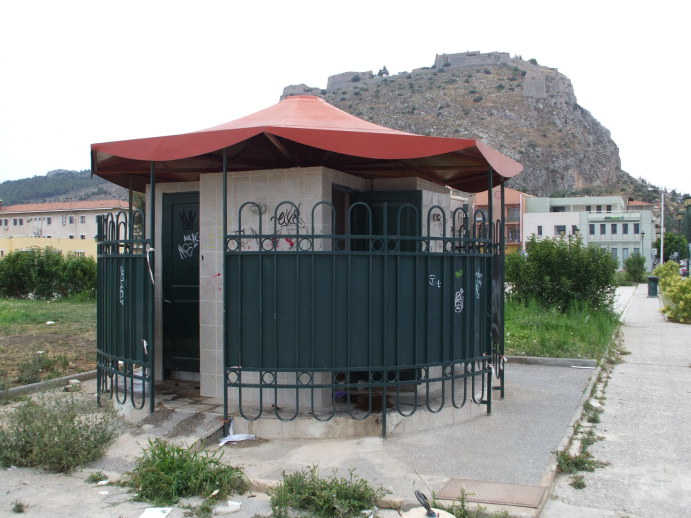
Here is the exterior of an absolutely horrible toilet in Nafplio, Greece. The Worst Toilet page has some further pictures, some background, and an opportunity (not recommended!) to see the dreadful interior.
The Urikeginal
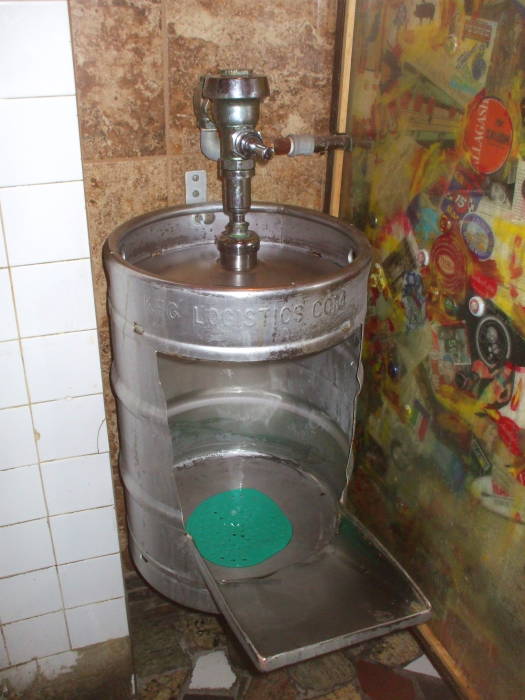
A urikeginal is a urinal fabricated from a stainless steel beer keg. Here is an example from a bar on the Upper West Side in New York City.
This seems like an obvious project, but the urikeginal is surprisingly rare.
A beer keg is typically made from thin stainless steel, which makes for a usefully corrosion-resistant starting point for building a customized urinal.
Hospital and Home Health Care Toilets, Bedpans, and Urinals
Home HealthCare Toilets Hospital Toilets
and Bedpans
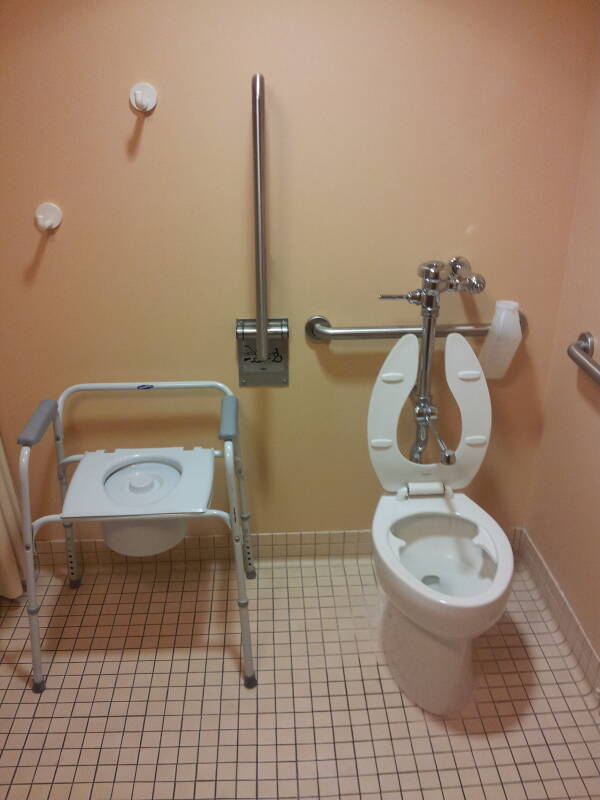
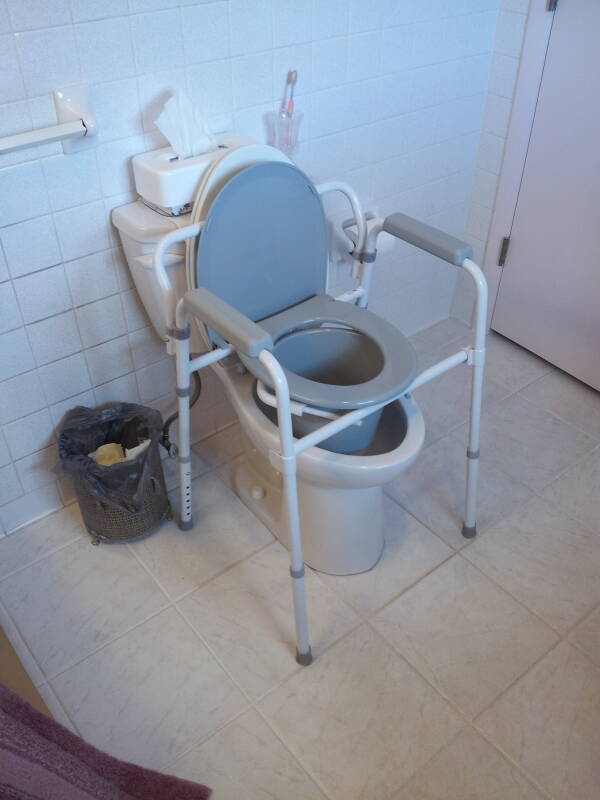
Hospital toilets have their own terminology. There is the bedpan and the handheld urinal. But do you know how to use a three-in-one like the one shown here? The same systems can also be used at home.
More critically, you should read the dedicated page to learn what a klizma is, especially if you are going to venture into eastern Europe. You do not want to casually agree to a klizma!
Stainless Steel Toilets
Stainless SteelToilets
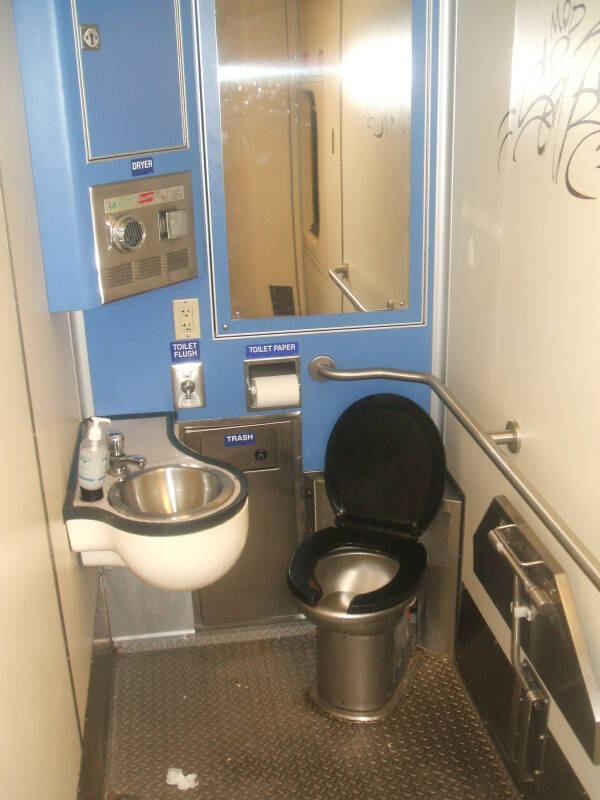
This stainless steel toilet is part of a mostly stainless steel bathroom suite on board a MARC (Maryland Rail Commuter Service) train between Washington and Baltimore on the east coast of the U.S.
Other stainless steel toilets seen on the dedicated page include examples on board Amtrak trains, on long-distance buses, and at beaches, parks, and pubs.
Loos With Views
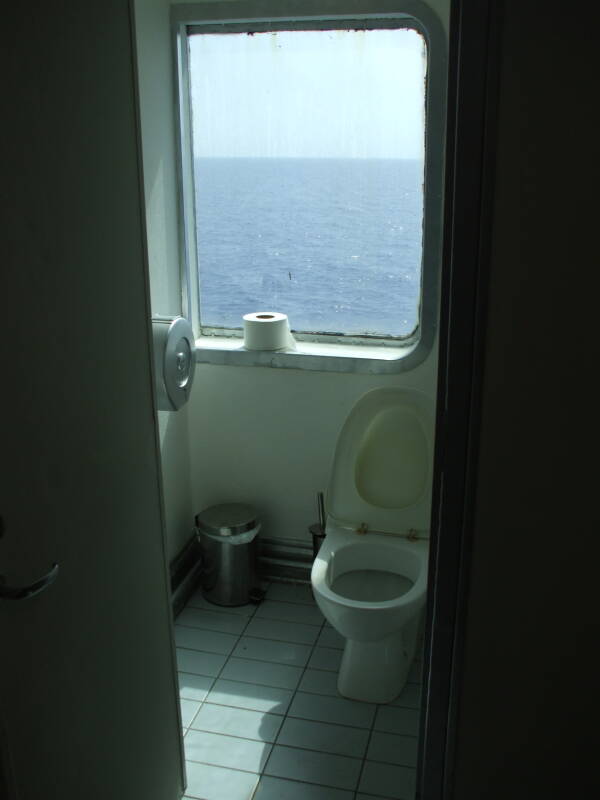
Toilets aren't always that much to look at, but sometimes you have a nice view from the toilet.
This scenic head is on board the F/B Artemis Greek ferry en route from Ios to Santorini in the Aegean.
What a view! You can look out from three decks above the waterline.
Loos with ViewsOther Loos With Views include public pissoirs in France, open-air toilets near the summit of Mount Sinai and in the Beşparmak Dağları mountain range in Turkey, open-air urinals in Amsterdam, and several more.
Animal Toilets
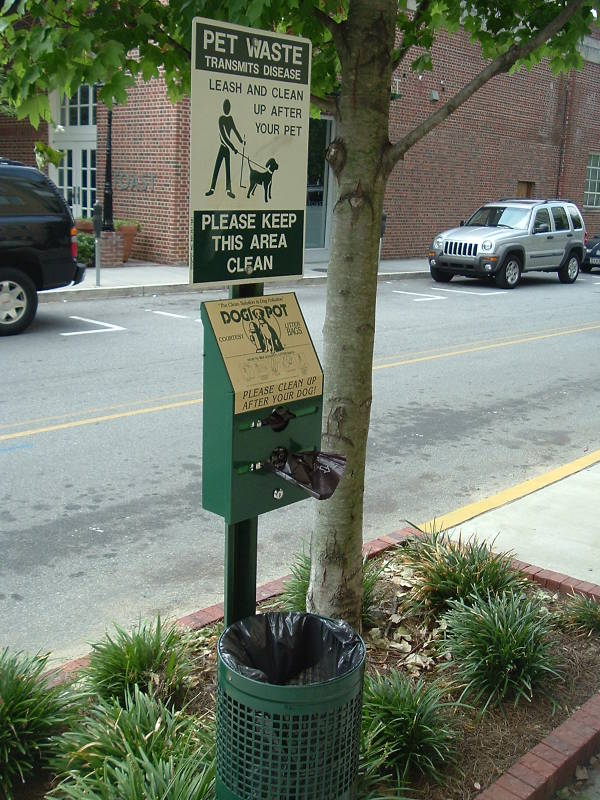
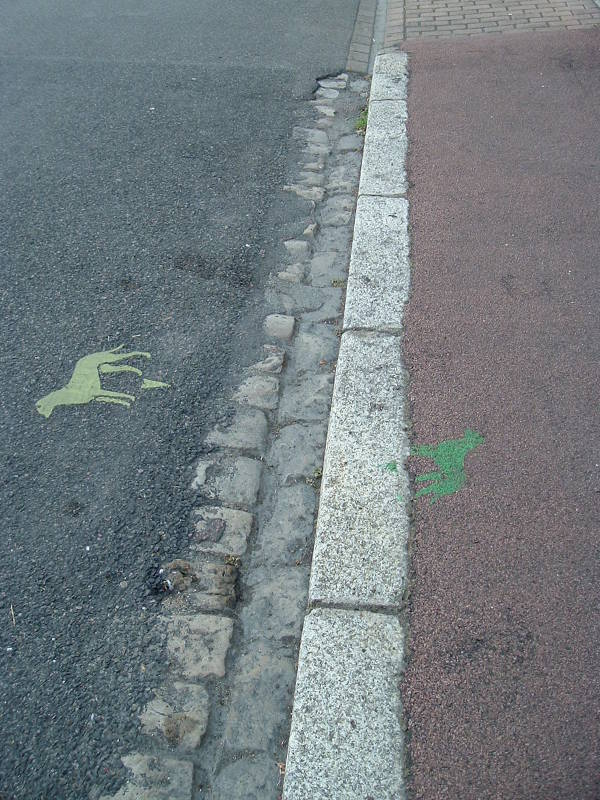
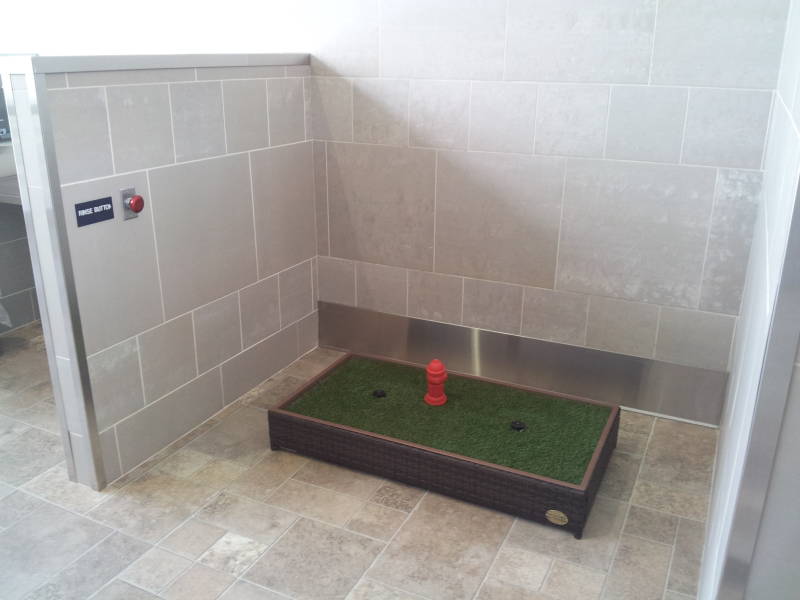
Animal ToiletsThese are examples of dog toilet systems in Atlanta, Georgia, in France, and at the Detroit airport.
Pressure-Flushing Toilets
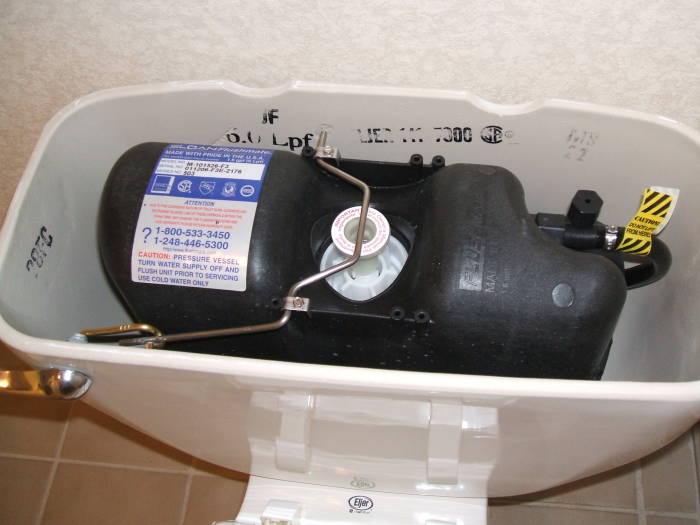
Pressure-flushing toilets are not at all unusual, but where else am I to file this category? They are very common in the U.S., especially in cities.
The ceramic tank is not used as a water tank, but it holds a plastic pressure vessel. That pressure tank contains a sealed air bladder.
When the tank is filled from the water supply line, it fills with water and compresses the air bladder to the point that the tank pressure nearly equals the water supply line pressure.
Pressure-FlushingToilets
The result is a flush using a small volume of water under pressure.
Dual-Flushing Toilets
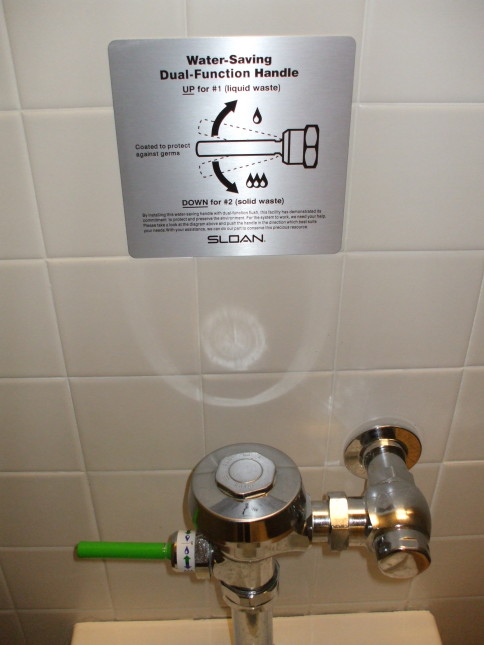
Dual-flush toilets provide a means for selecting a light flush for liquid waste only, or a full flush for solid waste.
Dual-FlushingToilets
The picture you see here shows a public toilet, connected to a high-flow high-pressure supply line. However, the dual-flush toilet page shows a unit suitable for use in a home, using a standard toilet tank.
Ice-Cooled Urinals
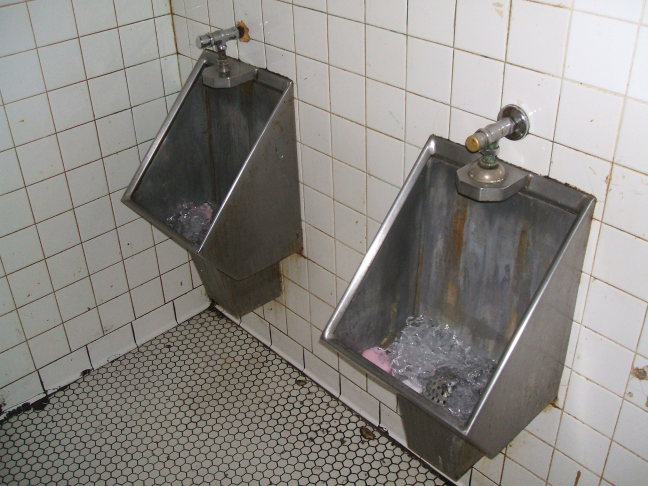
Many bars in the U.S. put lots of ice in their urinals. The ice has already been used to chill bottles, and therefore it is dirty.
Ice-CooledUrinals
Why put it in the urinals? I'm really not sure. But it has to go somewhere, and it would serve to keep down the odor of a typical urinal.
Toilets of Terror
Toilets ofTerror
The Toilets of Terror page shows the toilet, tub and sink used by one group of 9/11 hijackers.
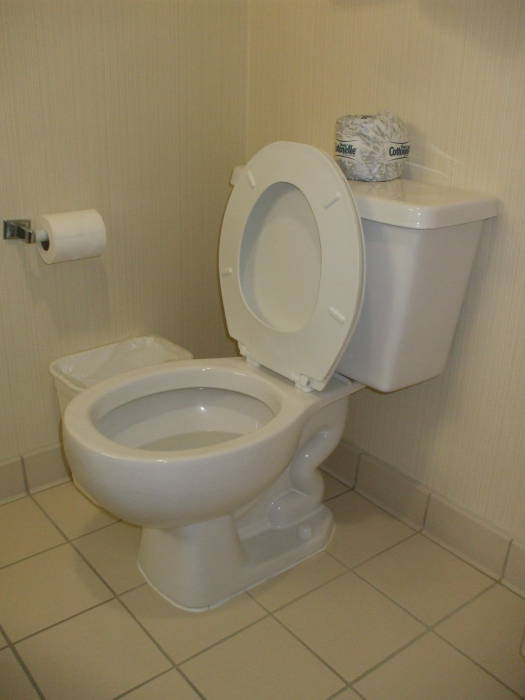
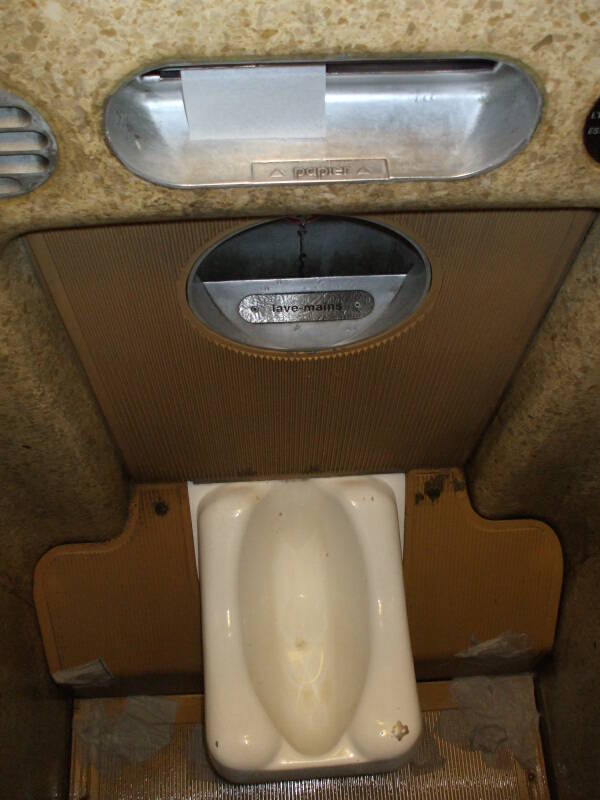
Futuristic High-Tech Toilets
Automated public toilets have been around for decades in France and are starting to appear in the U.S. Are they futuristic? If you're American, yes.
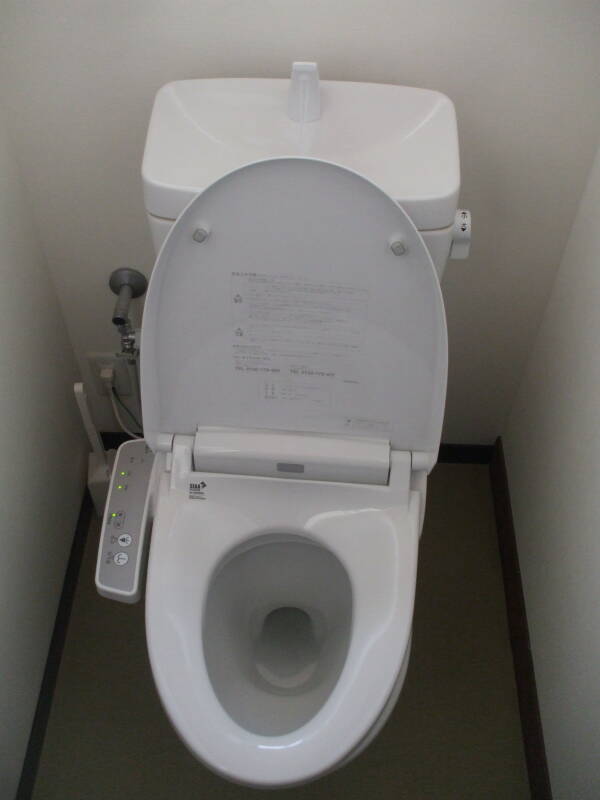
Some Japanese toilet seats are electrically heated and include multi-function built-in bidet capabilities. A console beside the seat has a couple of dials and some push buttons, and the bottom side of the seat lid has a multi-paragraph manual explaining its operation. Unfortunately, it is only in Japanese. The only English warns that you shouldn't break the toilet or urinate all over the seat.
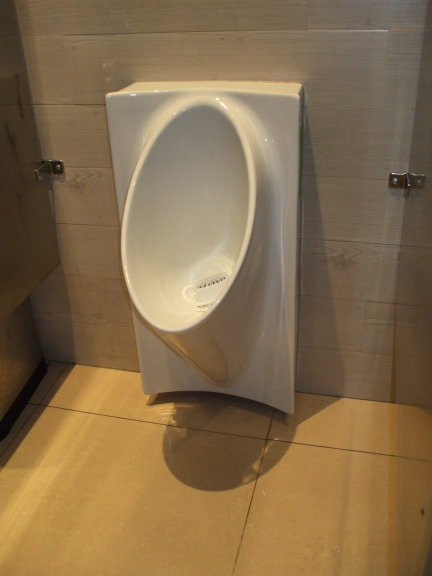
Waterless urinals are becoming more common, especially in areas where water is more scarce.
How do they work?
They are covered with a Teflon-like non-wetting surface. The drain openings are just very small slits to only pass liquid and block litter or other solid refuse. The drain opens into a collection vessel holding a layer of light oil, so the urine collects below a sealed oil surface.
FuturisticHigh-Tech
Toilets
See the dedicated high-tech toilet page for more details and pictures of these and other futuristic toilet designs.
The Sewers of Paris
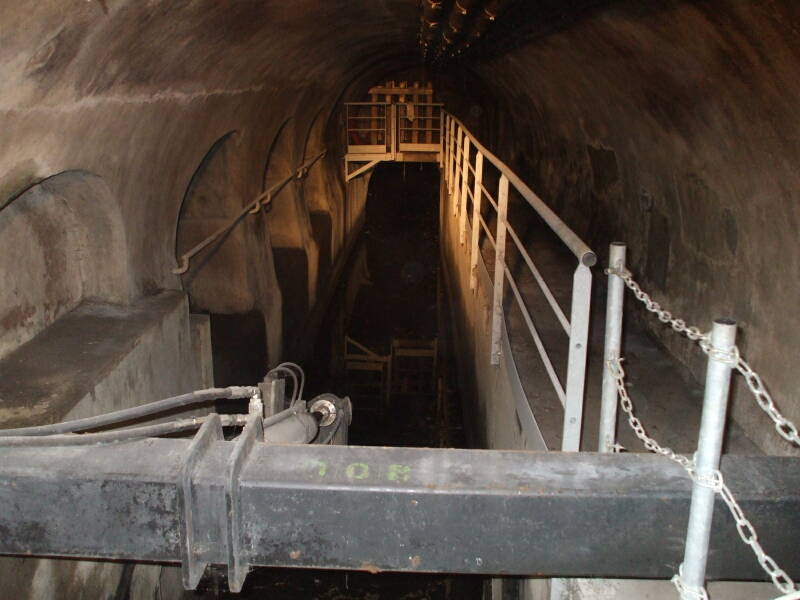
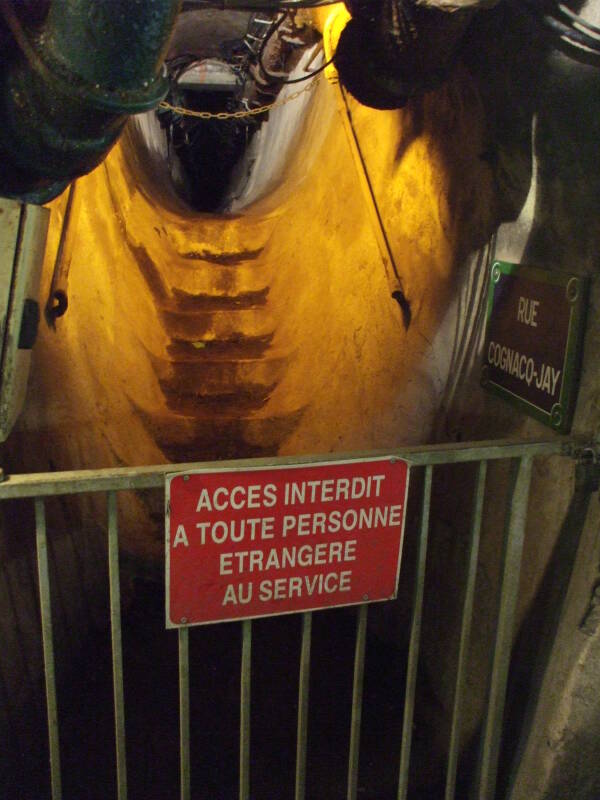
Yes, you can tour the sewers of Paris. And yes, of course I took pictures.
The Musée des Egouts de Paris is along the Seine, near the Eiffel Tower.
 The Sewers
 of Paris
See the detailed page for the history of the Paris sewers and the logistical details for touring the sewers.
Liquid Nitrogen Plumbing
Liquid nitrogen canisters are commonly found sitting casually on busy city sidewalks, especially in Lower Manhattan in New York. Here is one just a block from the New York Stock Exchange and another on a sidewalk along Broadway.
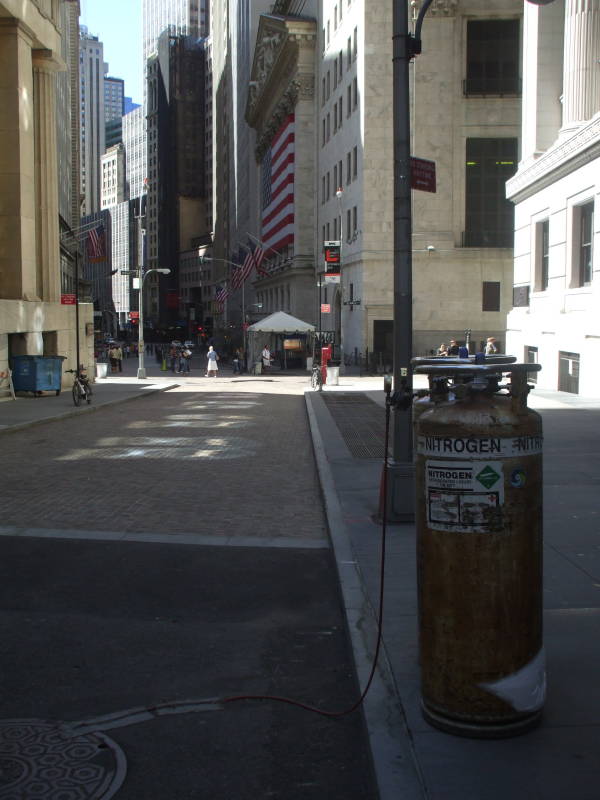
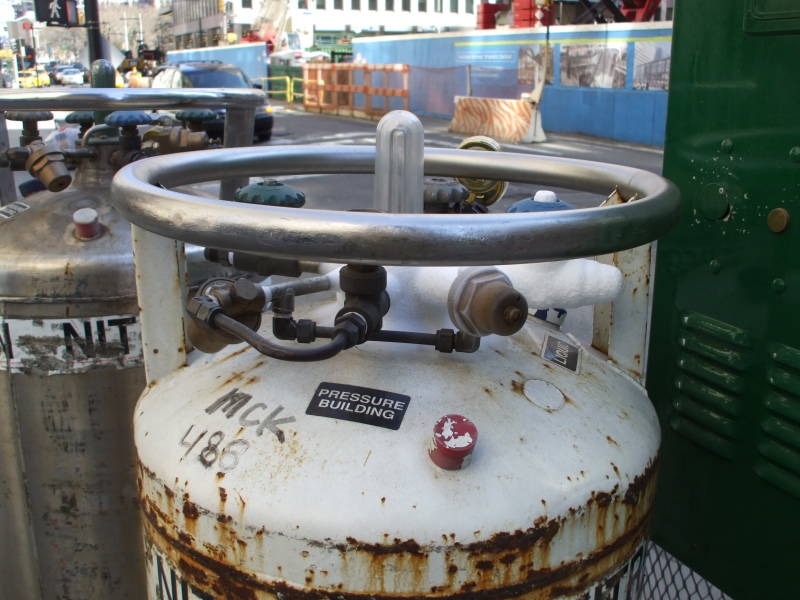
The liquid nitrogen is used to keep telecommunication cables dry when they must run through moist environments. New York's Financial District is at the very southern tip of the island of Manhattan, in the narrow twisting streets of old Nieuw-Amsterdam. Huge numbers of telecommunications lines run through a small area just a few meters above the water line, where the East River and the Hudson River join in New York Harbor.
Liquid NitrogenPlumbing
See the dedicated page for more pictures and details on liquid nitrogen, Dewar flasks, and telecommunications hardware.