Toilets of World Leaders:
The Throne Behind the Power
The Throne Behind the Power
Very powerful people have to use the toilet, just as we little people do. But they may use unusual or interesting toilets, or use the toilet in unexpected ways. See the page Privies, Privacy and Power for the historical toilet etiquette of those with great political power or high social status, from Bronze-Age West Asian leaders to U.S. Presidents.
Click on any of the pictures or links to be taken to detailed explanations with more pictures.
Mohandas K. Gandhi was one of very few political leaders in history to speak publicly about toilets. He criticized the traditional Hindu system of using people born into the Untouchable caste as manual latrine cleaners, and referred to it as "the shame of the nation." He first argued with his wife over her refusal to clean their latrine. She said that it was work for the Untouchables, he said that there was no such thing as an Untouchable person. At the 1901 Congress Party political convention, he told the delegates that it was a disgrace that the party was using members of the Untouchable caste to clean their latrines. He asked the delegates to clean their own latrines. They refused, and so he very publicly cleaned his own latrine.
Gandhi wrote that "Evacuation is as necessary as eating; and the best thing would be for everyone to dispose of their own waste."
Privies, Privacy and Power
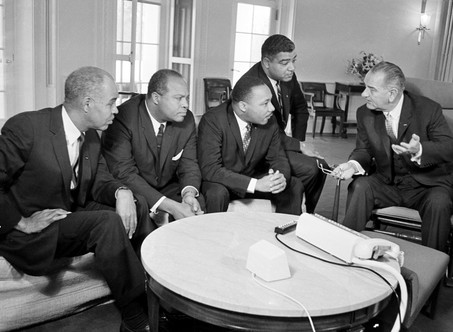
National leaders and others with great power play by a different set of rules. Starting at least as early as the Bronze Age, one of the privileges of great power has been not needing to care about privacy while using the toilet. Figures from the Hebrew Bible to the French Kings and on to U.S. President Lyndon Johnson have famously held meetings, greeted visitors, and talked to underlings while using the toilet. See the page Privies, Privacy and Power for the full details.
The Minoan Queen's Toilet
Minoan Plumbing3500 — 1100 BCE
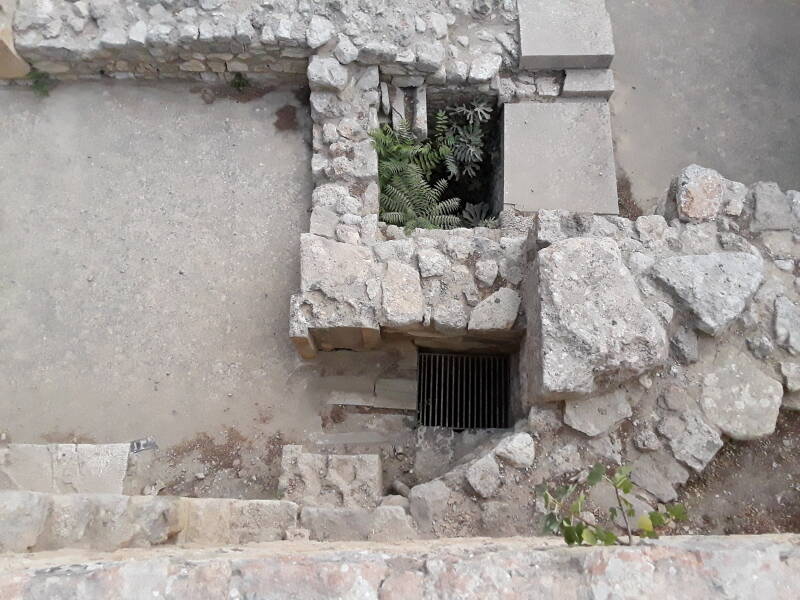
Below is the Queen's Toilet at the Palace of Knossos on Crete. Knossos had the first flushing toilets in Europe, possibly as old as those at Harappa and Mohenjo-Daro in the Indus Valley. The city also had terracotta water supply lines, and separated drains.
That is, one network of drains for sewage or septic waste, a second network to drain away rainwater. The rainwater can simply be drained away, at least the fraction that isn't captured in cisterns for drinking, bathing, and washing. Separated drainage is important for pollution control and public health. The Minoans had it by about 2000 BCE, while many cities in the U.S. still don't have it.
See the dedicated pages for Minoan plumbing at Knossos, Phaistos, Gortyn, Malia, and Amnisos.
The Chamber Pot of Agamemnon
Mycenae, or Μυκήνες in Greek, was first settled by Neolithic people in the 6th millennium BC. It's in the Peloponnese, south of Corinth and southwest of Athens in what today is southern Greece.
Between about 2100 and 1900 BC, during the Old Bronze Age, Indo-European people crossed Anatolia, moved through Troy and on to the west and south through Greece. Existing settlements in the mainland were primitive, and the new arrivals brought an advanced culture. A number of small kingdoms were established.
The kingdom of Mycenae became the most powerful by far, leading to the entire civilization of that area being called Mycenaean. For the 400 years from 1600 to 1200 BC, Mycenae was the most powerful kingdom in Greece.
Agamemnon'sChamber Pot
It's hard to distinguish history from myth in Mycenae. But somewhere around the 14th Century BC, there really seems to have been a King Agamemnon of Mycenae. Agamemnon's brother was Menelaus. According to Homer, Menelaus' wife Helen was abducted by Paris of Troy and taken back to his city on the northwest coast of Anatolia. Agamemnon then commanded the Achaean forces (what we often mis-label as "Greek" today) in the Trojan War.
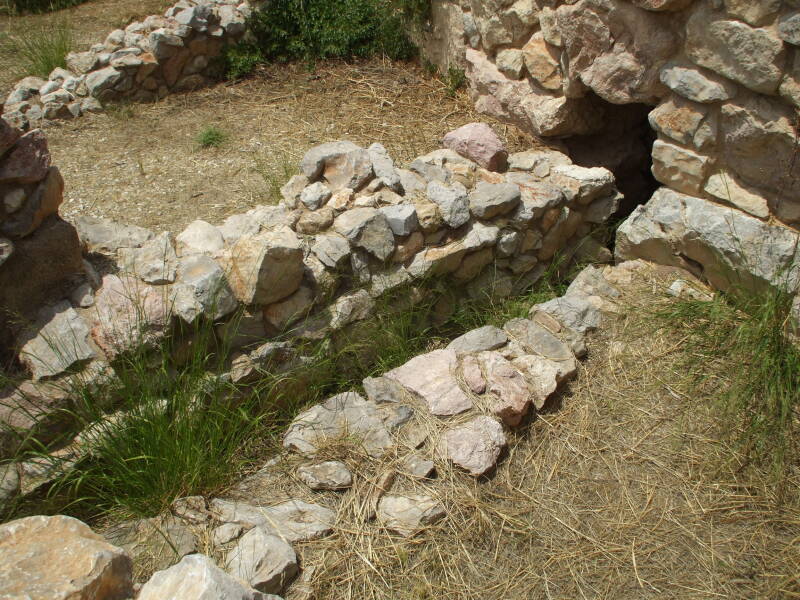
Meanwhile, back in the royal citadel of Mycenae, here is King Agamemnon's innermost royal chamber, and therefore the location of his chamber pot. Make that his Royal Chamber Pot.
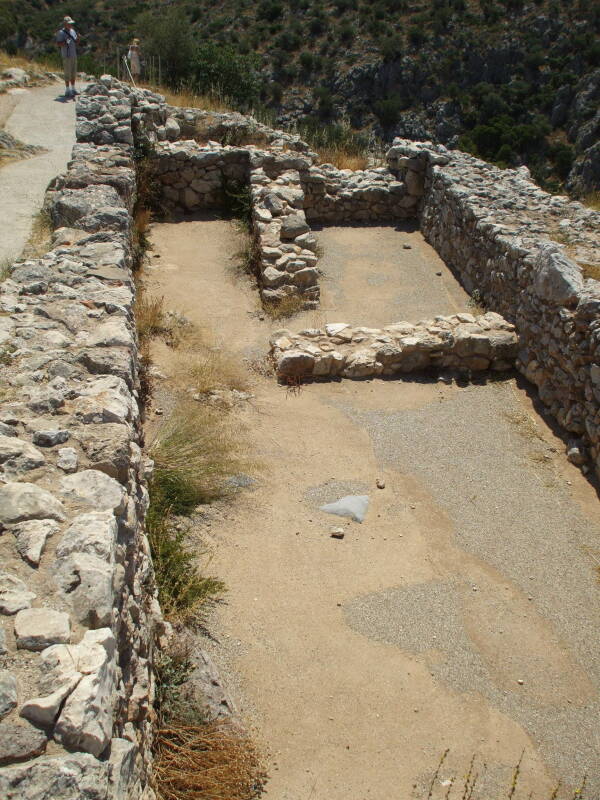
Below is the public latrine in the nearby fortress of Tiryns.
The Roman Senate Latrine
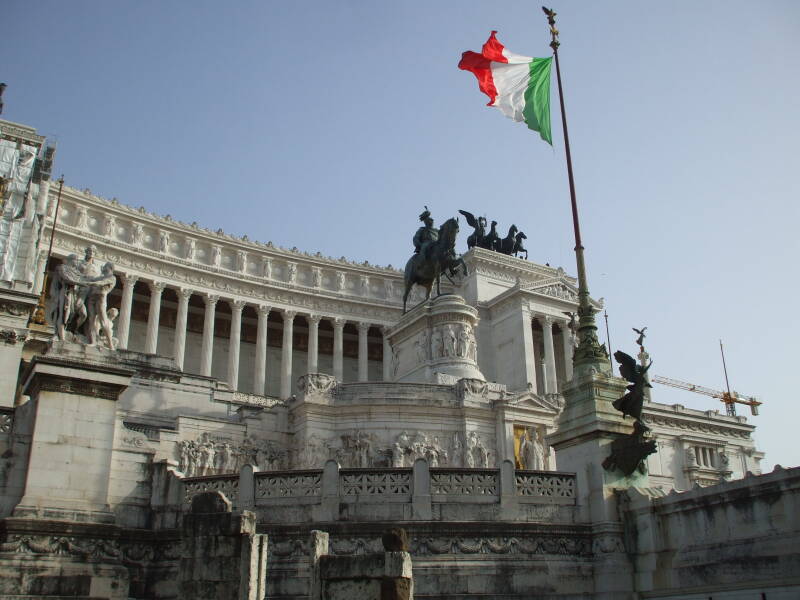
The city block of Rome between Largo di Torre Argentina and Via Florida on the north and south, respectively, and Via di Torre Argentina and Via San Nicola da' Cesarini on the west and east, respectively, contains a number of plumbing-related Roman ruins.
Roman SenateLatrine
The Statio Aquarum or the Office of the Department of Water Distribution are located here.
Also, the portico of Pompey, formally known as Gnaeus Pompeius Magnus, was located here. It served as the Roman Senate house. The Senate met there, and it was where Julius Caesar was assassinated on 15 March 44 BC.
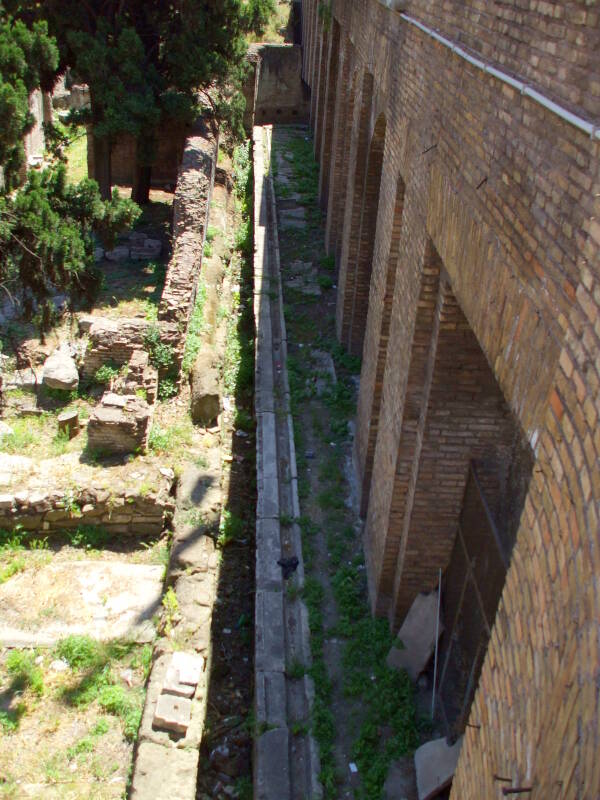
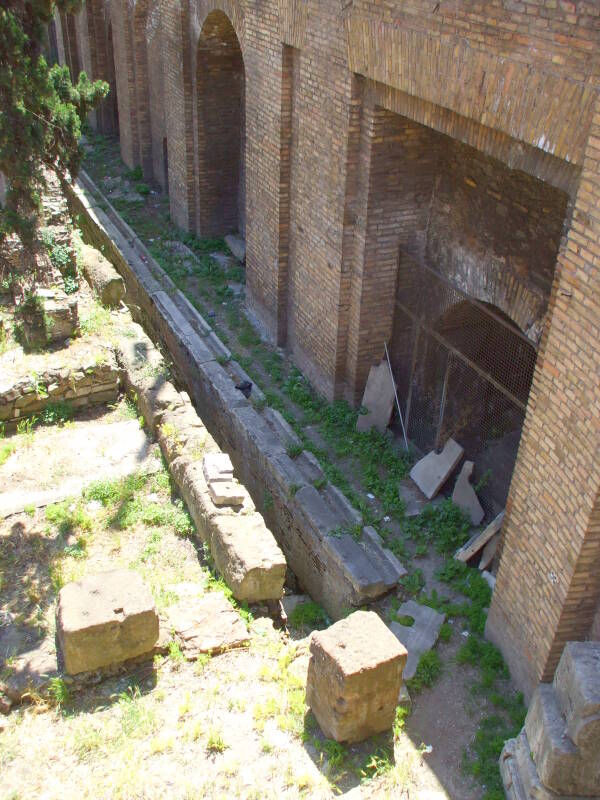
A large public latrine is in the northwest corner of this excavated block. This would have been the toilet used when the Roman Senate took a bathroom break, since the Senate met in the building adjacent to the south side of this large latrine.
A long row of seats, now missing, would have been directly over the large channel. Users would have been seated facing toward our right in this view, or toward the more recent brick wall, so they could bend forward and dip water from the shallow channel running past their feet.
Roman Emperor Nero's Toilet
Roman Emperor Nero had a luxurious villa in the town of Oplontis, the Villa Poppaea. Unfortunately for Nero, his villa was close to Pompeii, and more significantly, very close to Vesuvius.
Nero was born 15 December 37 AD, and ruled from 13 October 54 until his death by suicide on 9 June 68. He had accomplished quite a bit by then, but mentioning that is much like pointing out that Adolf Hitler liked dogs.
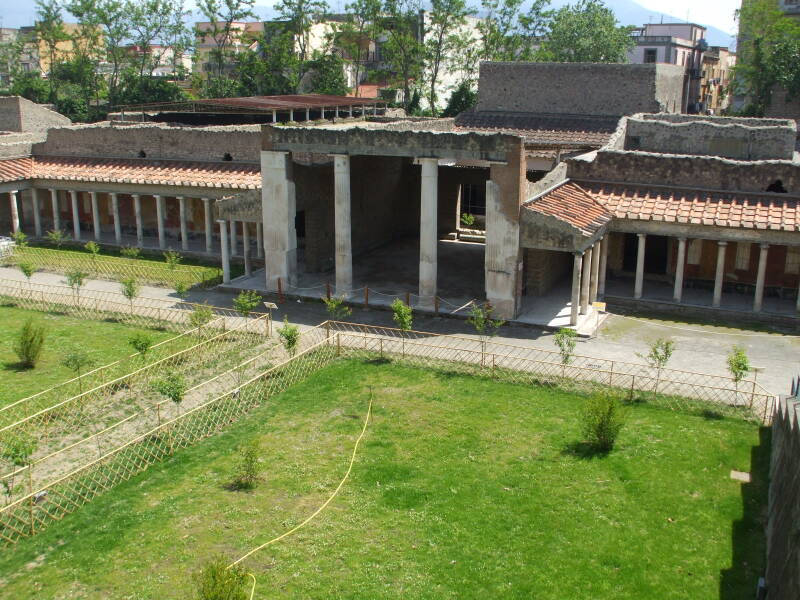
He could gather the entire family together in the toilet. Or at least those he hadn't yet killed.
In 53, Nero married his stepsister Claudia Octavia. Then, in 58, Nero began an affair with Poppaea Sabina, the wife of his friend (and future Emperor) Otho. He then ordered the murder of his mother in 59 because it did not seem politically feasible to divorce his stepsister and marry his friend's wife while his mother was alive.
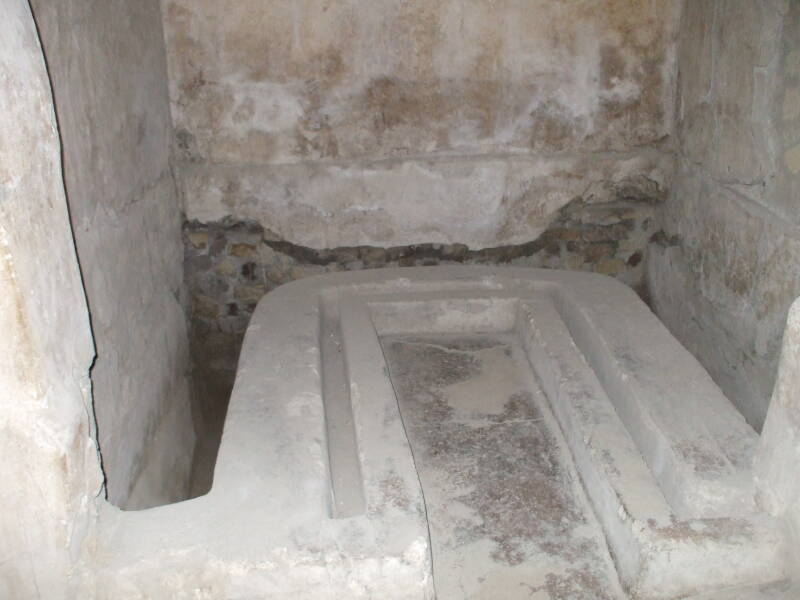
Nero's ToiletAfter Nero married Poppaea Sabina in 59, she used this as her main residence when she was not in Rome. And here we can see the large multi-person latrine inside the villa.
Click here for many more pictures and details about Nero's villa, his career, and this latrine.
The Latrines of Galerius
Galerius, formally and fully known as Gaius Galerius Valerius Maximianus, was born around 260 AD. He was Roman Emperor from 305 to 311.
Galerius based himself in Thessaloniki because, let's face it, Rome was pretty well gone by the early 300s. Constantinople was where you found culture. Since there was an Augustus already ruling in Constantinople, and Rome was a wreck, Galerius had a base in Thessaloniki where several Galerian monuments survive.
Late Roman Toilets305 — 311 AD
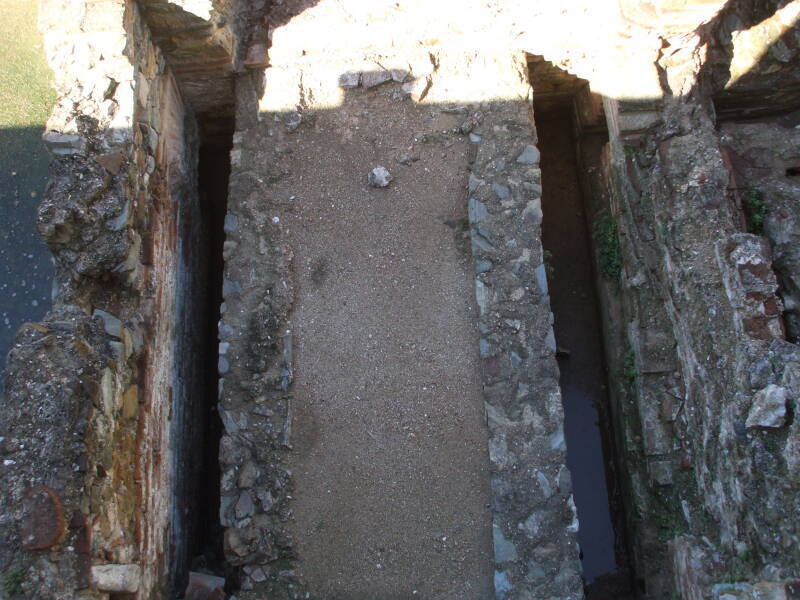
One of these is the excavated site of his palace, on today's Plateia Navarinou. Of course it had latrines, and of course I photographed them.
Toilets at Þingvellir
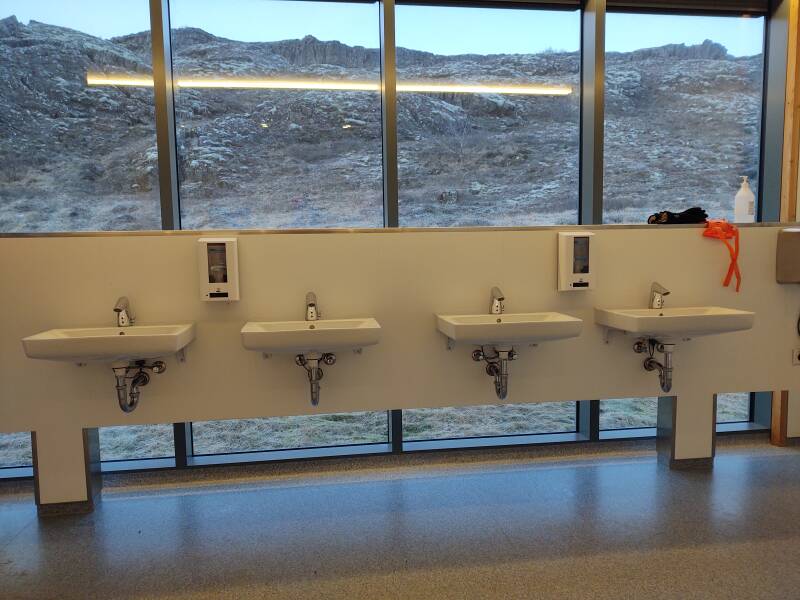
Iceland has the oldest Parliament in the world, their Alþing was founded in 930 CE. It originally met at Þingvellir, which is a rift structure of the Mid-Atlantic Ridge. The North American Plate and the Eurasian plate spread about an inch further apart each year.
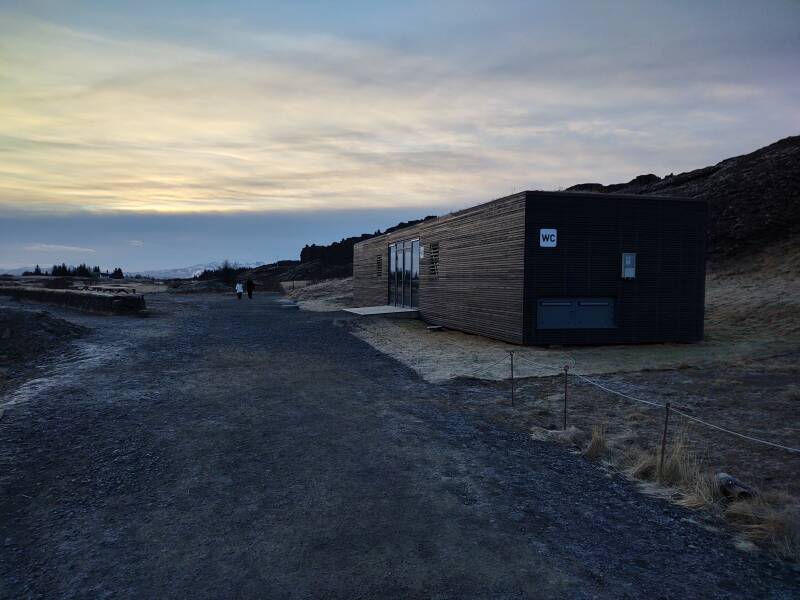
It's close to Reykjavík and a popular place to visit, so they have some nice public restrooms.
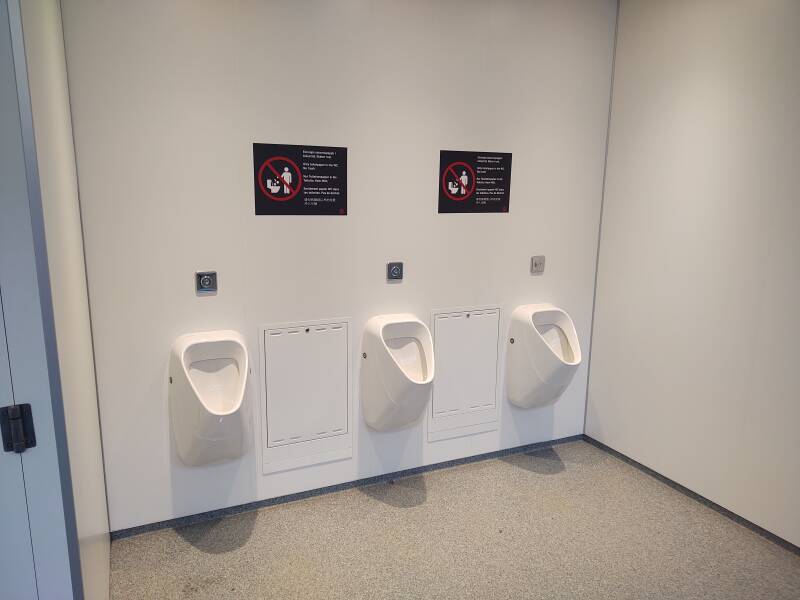
From the sinks you look right out into the historical site.
Garde-Robe of the Avignon Papacy
How many Roman Catholic Popes are there?
In the early 14th century, there were up to three! The Roman Papacy had relocated in 1309 to Avignon, in Provence, today part of southeastern France. After six more ruling Popes, the 7th of the Avignon Papacy decided to move the Papal court back to Rome. Things became very messy when he died shortly afterward..
At first there were two competing Popes, one newly elected in Rome and the other newly elected in Avignon. Then a group of church leaders met in Pisa, concluding for some reason that if they would only elect another new Pope, then the two competing ones would both step down.
No. The office of Pope brought enormous wealth and power. The result was three simultaneous competing Popes.
Meanwhile, where did the Avignon Popes poop?
Into a chamber pot held within a close stool maintained by the Groom of the Pope's Stool, the same as with all the other European royalty.
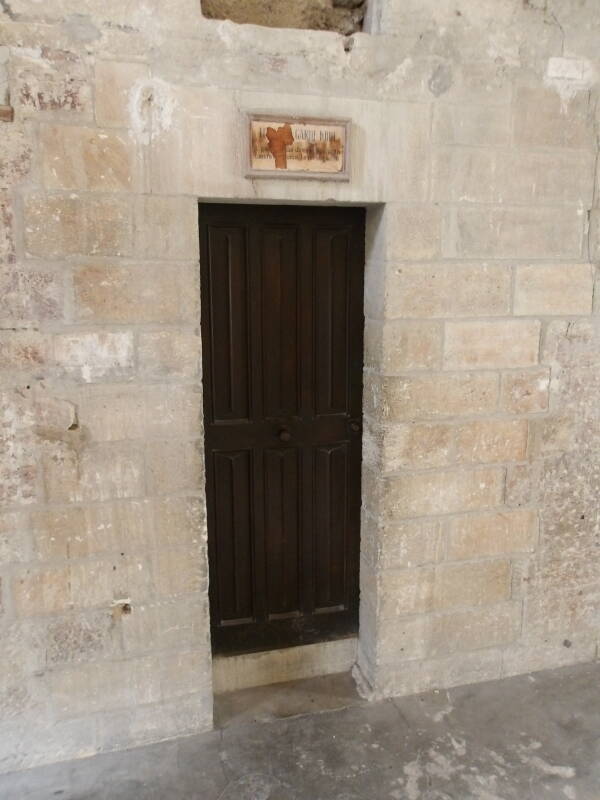
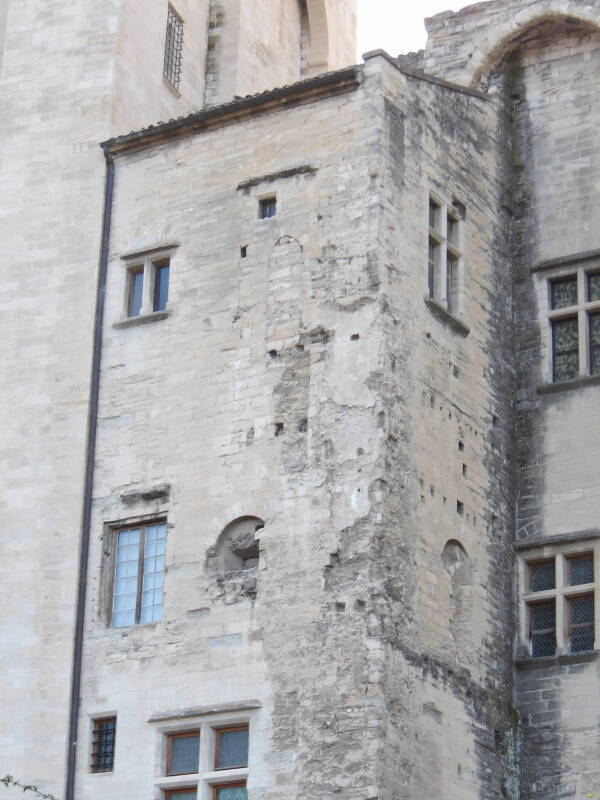
Garde-Robe of the Avignon PapacyBut what about the Papal court members, and all the guests of the enormous feasts thrown by the wealthy Pope?
They would have used a garde-robe, a privy attached to the outer wall of a castle or palace. It isn't highlighted on the official tour, but I spotted it.
The Ottoman Sultan's Toilet
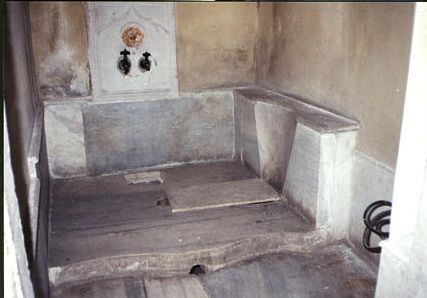
This is the Imperial Ottoman Throne, at least in some sense.
This is the toilet of the Sultan of the Ottoman Empire, the ruler of all the Middle East, northern Africa, and south-east Europe. This toilet is in the harem, the private quarters of the sultan, in Topkapı Palace in İstanbul, Turkey, the official and primary residence of the Ottoman Sultans from 1465 through 1853.
Imperial Ottoman Toilets1465 — 1853
There's a board over the hole, but you can still appreciate the fine marble and Sultan-level craftsmanship.
The Imperial Ottoman Turkish toilet page has further details on this toilet, and pictures and details of another mid to late Ottoman toilet design from Bodrum.
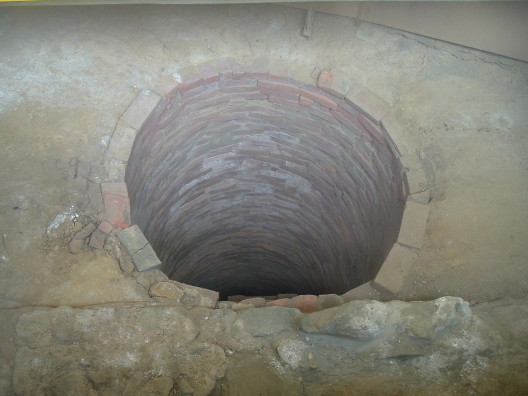
Benjamin Franklin's Privy Pits
Benjamin Franklin's privy pit can be seen at the site of his home in Philadelphia, Pennsylvania. A nearby sign says:
This brick-lined, circular "necessary" (privy) pit was probably built when Franklin expanded his house in 1786-1787. A stone drain connecting to a vertical brick pipe conveyed waste into the pit either from Franklin's "water closet", "bathing room", or "run-off" from the sunken areaway outside the cellar kitchen.
American Revolution Toilets1750 — 1790
The dedicated page has more pictures and details of this privy pit, a second privy pit, and a nearby well.
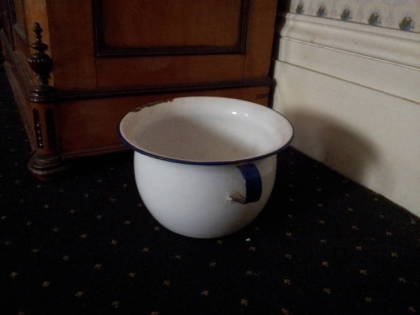
Theodore Roosevelt's Chamber Pot
Theodore Roosevelt was born in New York City in 1858, in a nice brownstone at 28 East 20th Street between Broadway and Park Avenue South.
His family was financially very successful, but centralized water distribution and sewage collection had not extended that far south in Manhattan.
Theodore Roosevelt'sChamber Pot
The Croton Aqueduct had opened in 1842, and the Croton Distributing Reservoir was put in service that same year at 42nd Street. But water and sewage pipes would not extend down to 20th Street for several more years.
So, the Roosevelt family had to carry in their water, and carry out their waste collected in this chamber pot.
Woodrow Wilson's Toilets, Tubs, and Sinks
Woodrow Wilson was the 28th President of the United States, serving 1913-1921. He initially kept the U.S. out of what later came to be known as World War I, but Germany's increasing belligerence forced the U.S. into the war.
Wilson negotiated for the armistice ending World War I, aiming for an equitable peace and statehood for formerly oppressed nations. His famous Fourteen Points address introduced the idea of a League of Nations to preserve territorial integrity and political independence. He was given the 1919 Nobel Peace Prize for his peace-making efforts.
He suffered a debilitating stroke toward the end of his second term in office, gradually improving through the remainder of that term. He and his wife retired to a very nice home in Washington. He died in 1924, and she continued living in the house until her death in 1961.
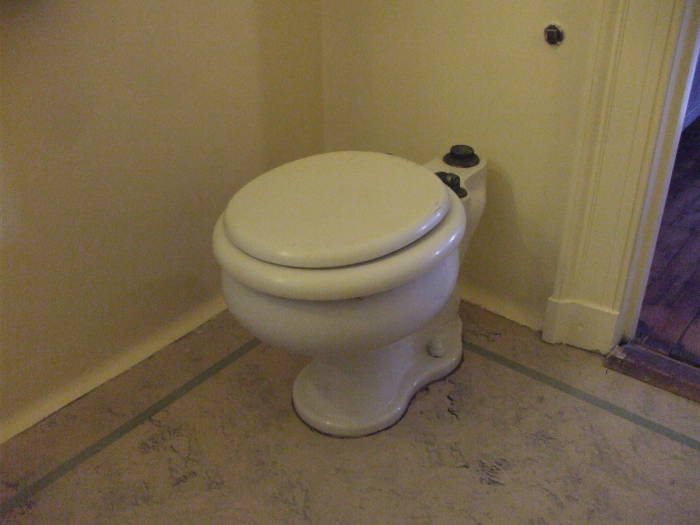
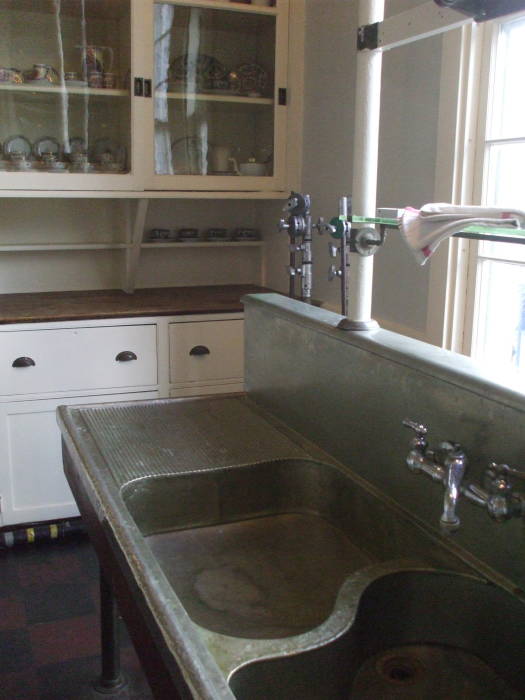
Toilets, Tubs, and Sinks
Here you see Woodrow Wilson's toilet in the bathroom off his bedroom, and the large sink in the kitchen.
See the dedicated page for many more pictures and details about Woodrow Wilson and his home in Washington.
Fascists and Laxatives
Benito Mussolini's Blackshirt thugs used the powerful laxative castor oil as a weapon of torture and coercion, as punishment and threat.
He didn't devise this on his own. Like much of Italian Fascism, including the Roman salute, the balcony address in which the dictator harangues the crowd at length, and the appropriation of religious symbols for large public secular rituals, he also got the idea for laxative punishment from Gabriele D'Annunzio, a poet, writer, journalist and playwright turned anarcho-fascist.
Fascists and LaxativesThe page dedicated to Fascist coercive use of laxatives has all the details.
Leon Trotsky's Toilet, Tub, and Hot Water Heater
Leon Trotsky's Toilet, Tub, and Hot Water HeaterLeon Trotsky was born Lev Davidovich Bronshtein. He changed his name during Czarist days to something derived a German term for "defiance". Lenin probably would have named him as his successor, but Lenin's stroke prevented that. Trotsky was a party theorist, and seems to have been closer to the original intent of Marx than any other prominent Soviet figure.
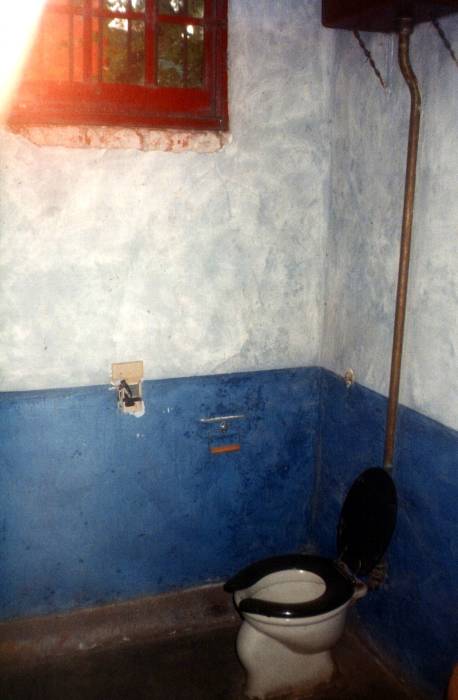
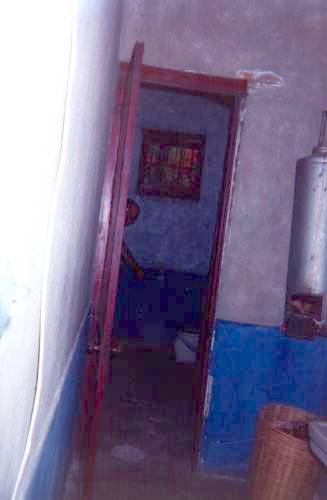
When Stalin seized power, Trotsky left for exile in Mexico. He was sentenced to death in absentia and was assassinated with an ice ax in Mexico City in 1940 by an agent of Stalin.
You can tour his luxurious home in Mexico City. The communist leaders were all for collectivism and "from each according to his abilities, to each according to their needs", so long as it didn't apply to them. Their needs-to-abilities ratios were always rather high.
See the detailed Leon Trotsky page for many more details, and pictures of Trotsky's toilet, tub, and hot water heater.
Franklin Delano Roosevelt's Toilet
Franklin Roosevelt was elected to four terms as U.S. President, serving from 1933 until his death during his fourth term in 1945.
Franklin Delano Roosevelt's ToiletNo, this is not him — it's a rather startled looking manniquin on board the Sacred Cow, his Douglas C-54 Skymaster that was the first purpose-built U.S. Presidential aircraft. It is now at the National Museum of the U.S. Air Force at Wright-Patterson Air Force Base outside Dayton, Ohio.
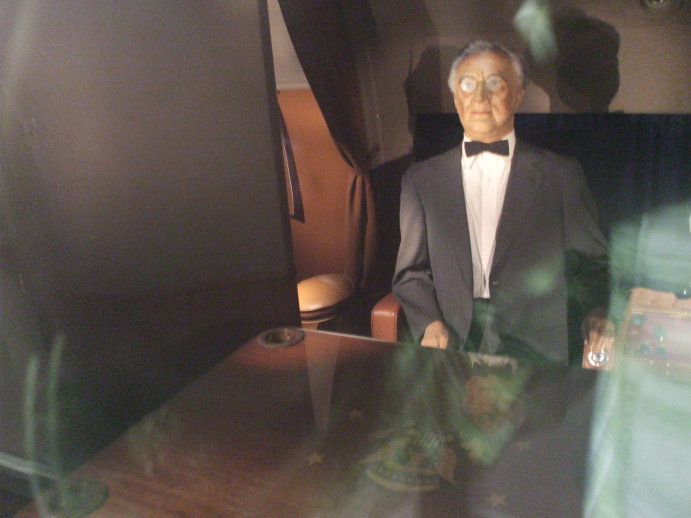
Roosevelt's on-board lavatory is barely visible through the curtain behind him.
Winston Churchill's Chamber Pot
Winston Churchill was Prime Minister of the United Kingdom twice, 1940-1945 and 1955-1955, and was one of the great wartime leaders.
This is Churchill's private room within the Cabinet War Rooms in London.
Winston Churchill's Chamber PotThe Cabinet War Rooms were a fortified underground complex where the British leadership monitored and controlled military action during World War II.
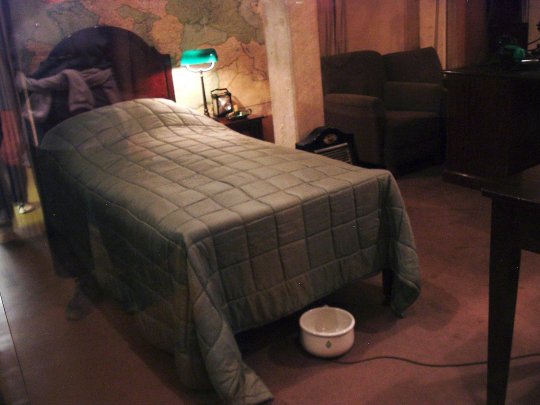
The dedicated page shows more pictures, including a toilet in a secret government bunker dug into the White Cliffs of Dover.
Adolf Hitler's Toilet
German madman Adolf Hitler led Germany from 1933 until his suicide in 1933. He wanted to rule the world, but the only throne he ever occupied is a ceramic commode now sitting in an auto repair shop in a small town in New Jersey.
The Grille was the official State Yacht of the Third Reich. It was converted to military use during World War II, laying mines along the coast of France and patrolling in the Baltic Sea. Karl Dönitz stood on its deck on 1 May 1945 to announce that Hitler had committed suicide as the Soviet Red Army was taking Berlin, and Dönitz was now Germany's leader.
The British Royal Navy seized the Grille at the end of the war, and sold it to private owners in the U.S. in 1947. In 1951 its owner scrapped the ship after removing and selling a lot of small pieces — portholes, flag poles, decking, and some plumbing.
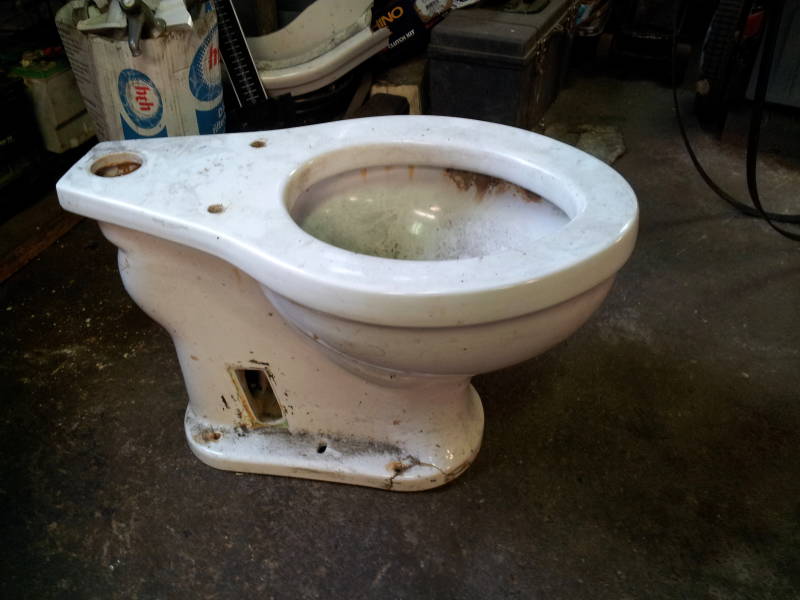
Maritime Toilet
The owner of an auto repair shop needed a toilet and sink for his garage, and happened to be good friends with the surplus ship's owner. He installed them in his garage, and there they sat and functioned for sixty years, through the purchase of the garage by a new owner.
See the dedicated page for many more pictures and historical details, and a description of my visit to see it.
Harry S Truman's Toilet
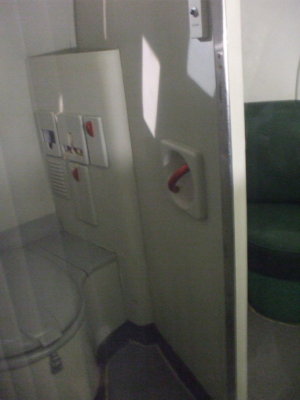
U.S. Vice-President Harry Truman assumed the office of President upon the death of Franklin Roosevelt in 1945, and won re-election in 1948.
The Independence was his custom built VC-118, the military designation for the Douglas Corporation DC-6 airliner. It is also at the WPAFB museum. The private Presidential lavatory is shown here.
The dedicated page also has pictures of Truman's wash basin in his personal lavatory area, and the general purpose lavatory used by his staff and the aircraft crew, as well as views of the aircraft's exterior.
Harry S Truman's ToiletDwight Eisenhower's Toilets
Dwight Eisenhower was the Supreme Commander of Allied Forces in Western Europe during World War II. He planned and led all major operations in the Western European Theatre of Operations, with OVERLORD, the Allied invasion of Normandy in June 1944 being the biggest of all.
After the war he served as the commander of NATO, and in 1952 and 1956 he was elected to two terms as President of the U.S.A.
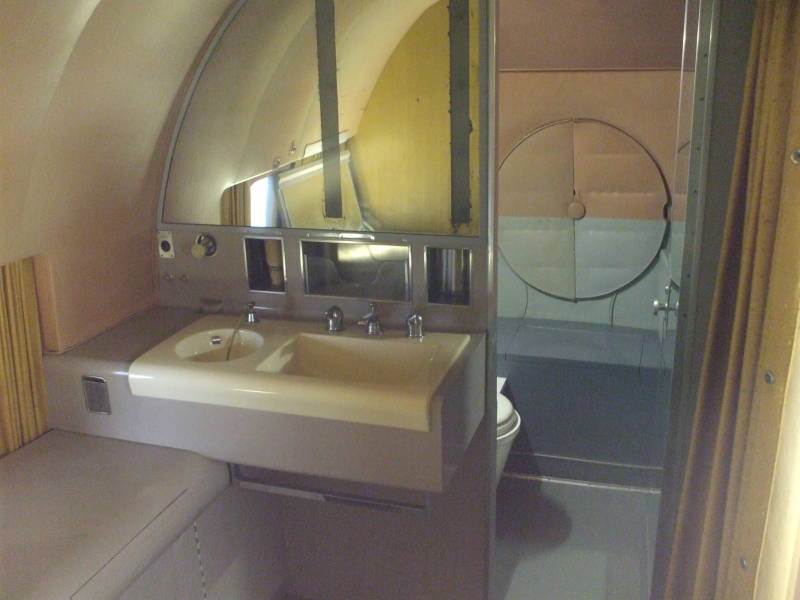
Eisenhower's
Toilets
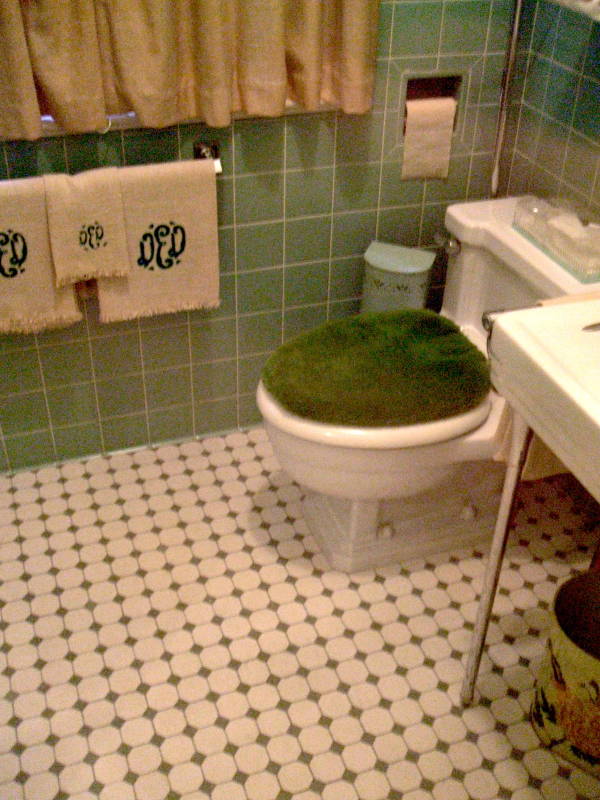
Above is the private lavatory within the Presidential stateroom area on board the Columbine III, a Lockheed Super Constellation providing the U.S. President true nonstop intercontinental travel ability for the first time. The dedicated page also shows the general purpose lavatory used by his staff and the aircraft crew, as well as views of the aircraft's exterior as seen at the WPAFB museum.
Below is the bathroom at his retirement home near Gettysburg, Pennsylvania. See the dedicated page to learn about how Winston Churchill, Charles De Gaulle, and Nikita Krushchev may have also used the very toilet seen here.
Robert F Kennedy's Water Fluoridation System
Robert Kennedy'sWater Fluoridation System
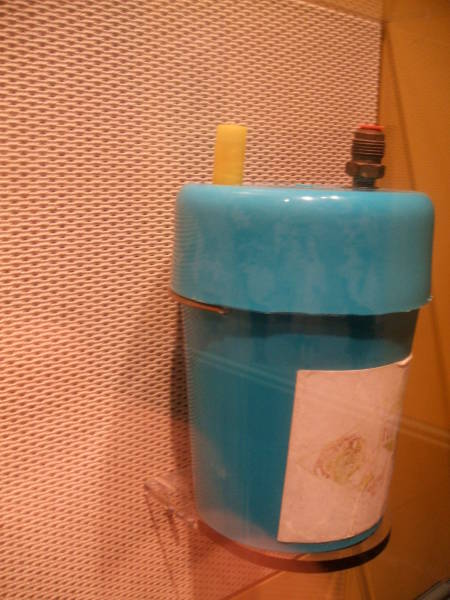
Soon after his brother's election as U.S. President, Robert F Kennedy was named Attorney General of the United States.
He was also selected by the Centers for Disease Control to test a home water fluoridation system.
Here is a picture of the unit. See the detailed page for more pictures, background on water fluoridation, and directions to where this filter can be seen today.
Air Force One: Presidential airborne toilet used by Presidents Kennedy through Clinton
U.S. Presidents Franklin Roosevelt through Eisenhower had personal aircraft, all of which were given distinctive names by their VIP users.
Air Force OneLavatory
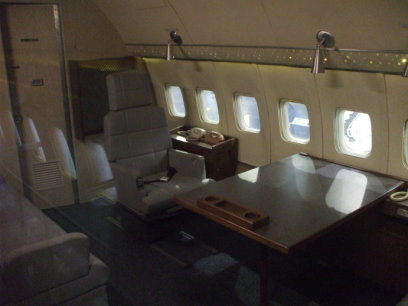
A USAF Boeing VC-137C, the military designation for the 707-320B, was built specifically for use by the President of the United States during the administration of John F. Kennedy. The aircraft had serial number 62-6000 and used callsign SAM 26000 (for "Special Air Mission") during routine flight, and Air Force One when the President was on board. The Boss would be seated at the table seen here, with a personal lavatory through the narrow doorway behind it.
This aircraft carried Kennedy and all of the next seven Presidents: Johnson, Nixon, Ford, Carter, Reagan, George H.W. Bush, and Clinton. Today it is at the WPAFB museum.
U.S. Senator Larry Craig's Airport Men's Room Stall
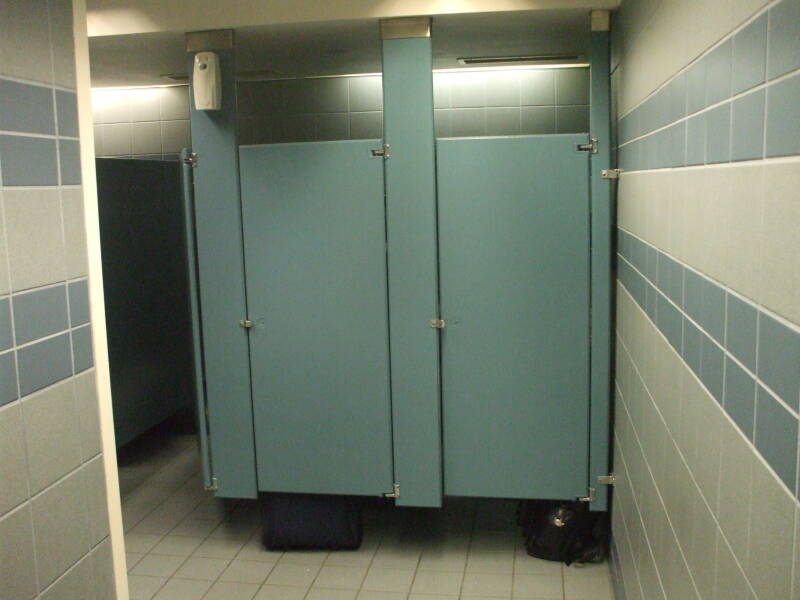
On June 11, 2007, U.S. Senator Larry Craig of Idaho was arrested for lewd conduct in a men's restroom at the Minneapolis — St. Paul International Airport (MSP).
Yes, I realize that this page is titled "Toilets of World Leaders", but then I also included Nero. "Toilets of Political Figures" might have been a better title.
Senator Larry Craig's Men's Room StallSee the dedicated page for details on the whole sordid mess: Craig's apparent solicitation, the arresting officer's report, Craig's Senatorial mug shot, the debacle of Craig's attempt to fight the charges, and several more pictures of the scene of the crime.
Donald Trump's Gold Toilet
Maurizio Cattelan's America is a fully functional toilet cast in solid 18-carat gold. It went on exhibit at the Guggenheim Museum in New York City in late September 2016. It remained on view, and in use, for about a year. From the museum's description of the piece:
Cattelan's toilet offers a wink to the excesses of the art market, but also evokes the American dream of opportunity for all, its utility ultimately reminding us of the inescapable physical realities of our shared humanity.
Fluxus: Toilets as Contemporary ArtVisitors were invited to interact with it "individually and privately", in order to "close the transgressive loop". As you can see from the blue Sani-Flush border, I closed the loop by interacting fully.
Ciritics, of course, described the piece as a pointed satire aimed at excesses associated with wealth in the U.S. Cattelan described it as "1 percent art for the 99 percent".
Then, in September 2017, a White House spokesperson wrote to the Guggenheim Museum, asking if the Trumps could borrow Landscape With Snow, a Vincent van Gogh painting, to decorate the Presidential residence.
Nancy Spector, the Guggenheim's chief curator, responded to Donna Hayashi Smith of the White House Office of the Curator. "I am sorry... to inform you that we are unable to participate in this loan since the painting is part of the museum's Thannhauser Collection, which is prohibited from travel except for the rarest of occasions,"
However, the America exhibit had just ended and the golden toilet was available "should the President and First Lady have any interest in installing it in the White House." Cattelan, the artist, had reported that he "would like to offer it to the White House for a long-term loan. It is, of course, extremely valuable and somewhat fragile, but we would provide all the instructions for its installation and care."
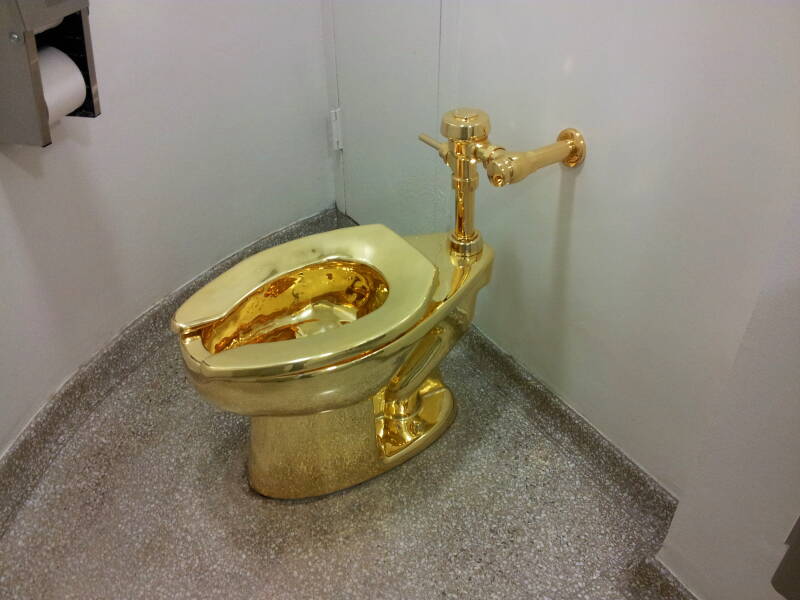
It seemed appropriate. Trump, after all, decorates his home and even his private airliner much like Saddam Hussein's palaces, including gold-plated bathroom fixtures.
Stories on this request and counter-offer,
and also describing Trumps Hussein-like taste
in decoration, include these from:
The Washington Post
The New York Times
The Hill
Time
BBC News
Forbes
Newsweek, Dec 2017
Newsweek, Jan 2018
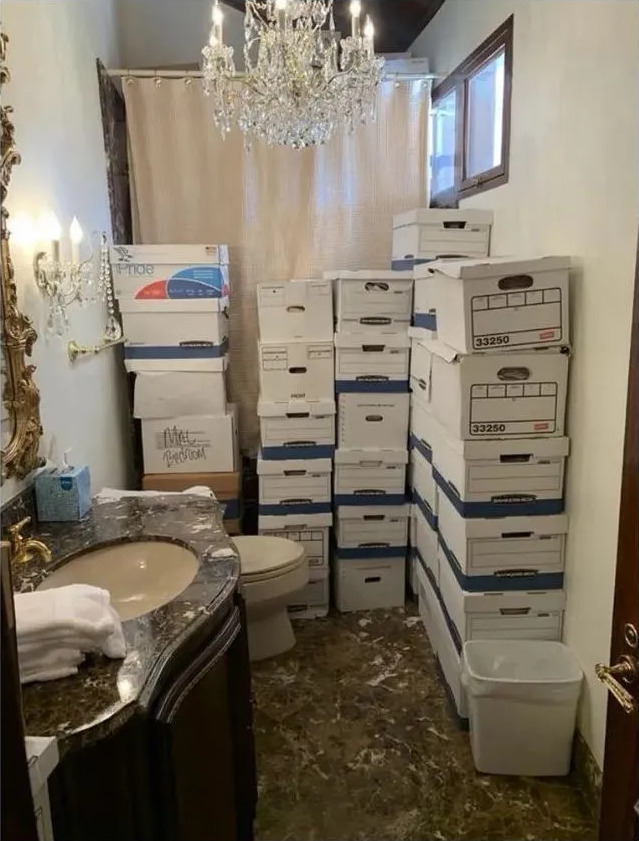
Trump also stole dozens of boxes filled with classified documents and stored them at his golf resorts. Some of them ended up stashed in bathrooms with over-the-top dictator-stype garish decorations that at the same time look incredibly cheap and tacky.