Movie Star Toilets
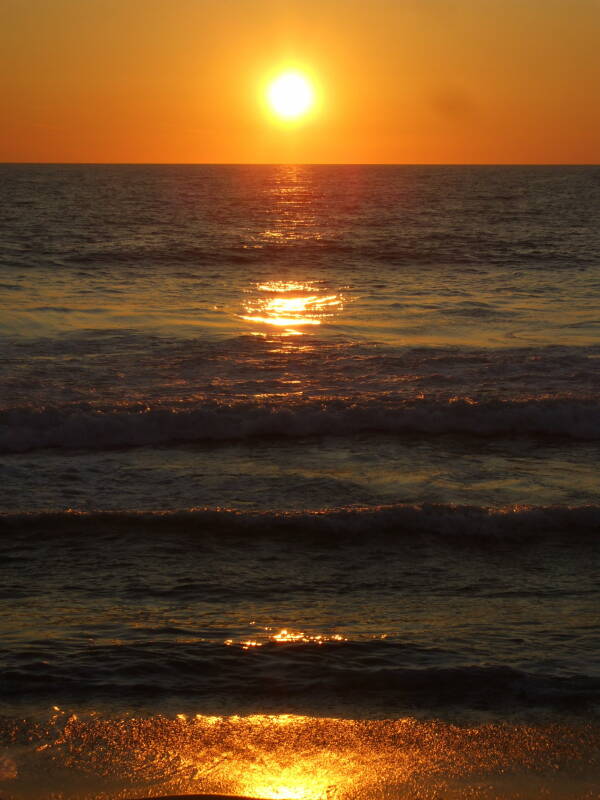
The sun sets into the Pacific Ocean west of Los Angeles and Hollywood. How do movie stars use the toilet? They certainly aren't like you or me, and this includes their toilets. Imagine the sound of a distant clarinet solo and a gentle wafting scent of lilac and lavender. It is rumored that some of your top-drawer stars — your Clooneys, your Jolies, your Schneiders — why, they only defecate a few times a year during cleansing rituals in the desert outside Palm Springs. Quite simply, they just aren't like us.
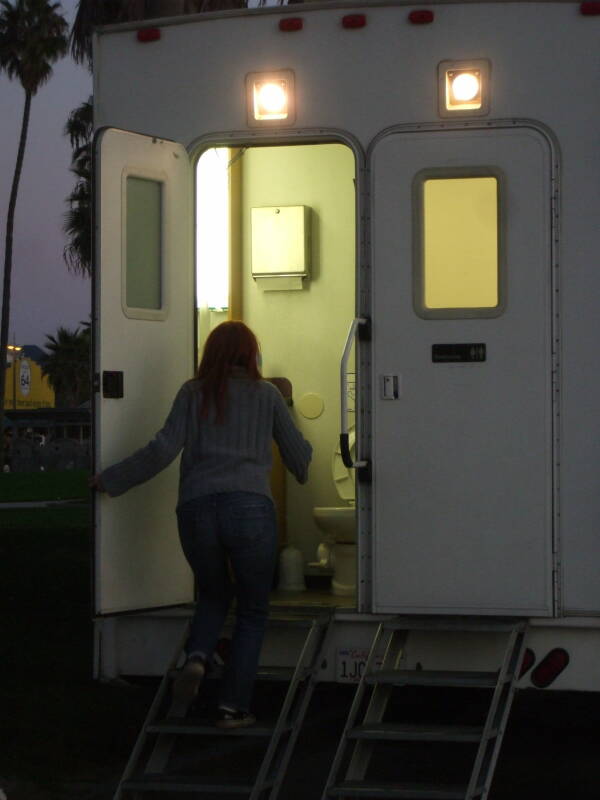
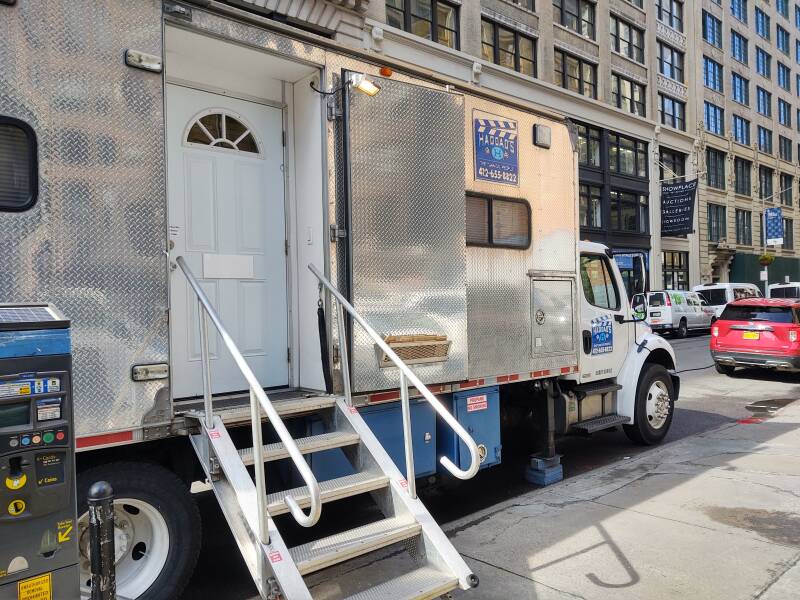
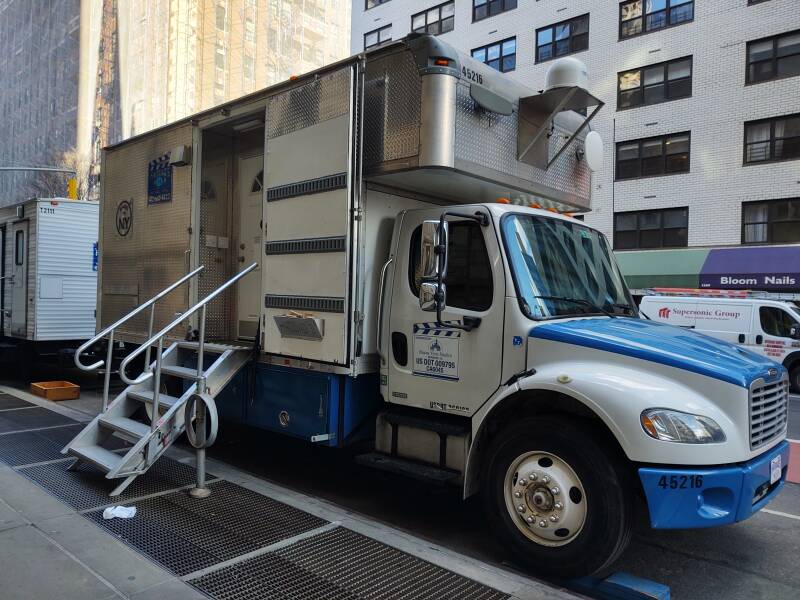
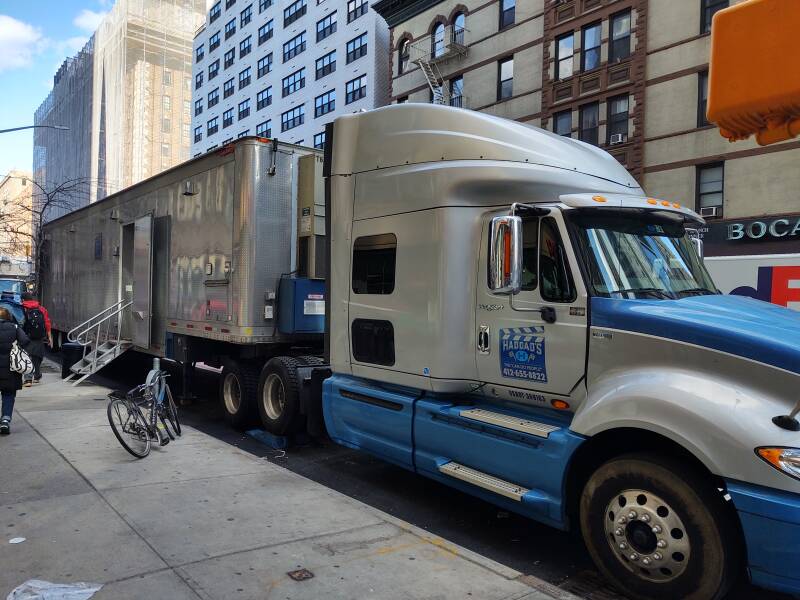
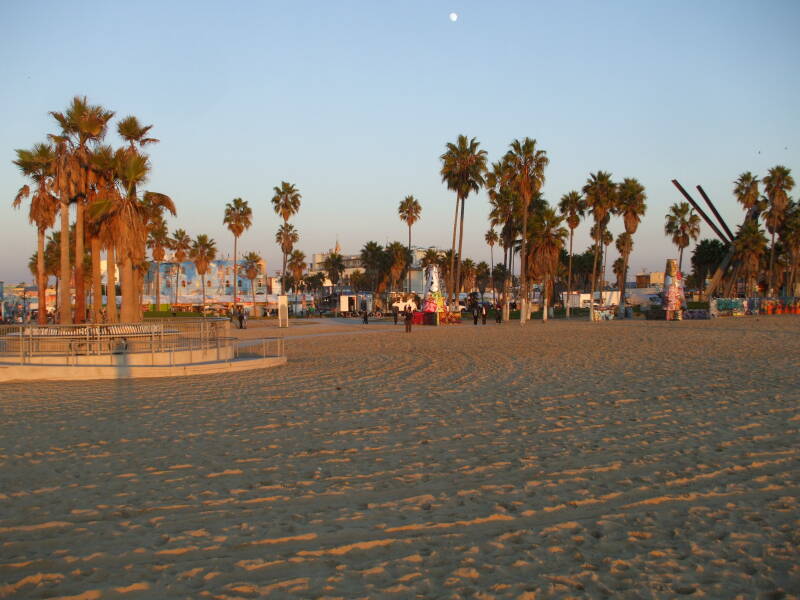
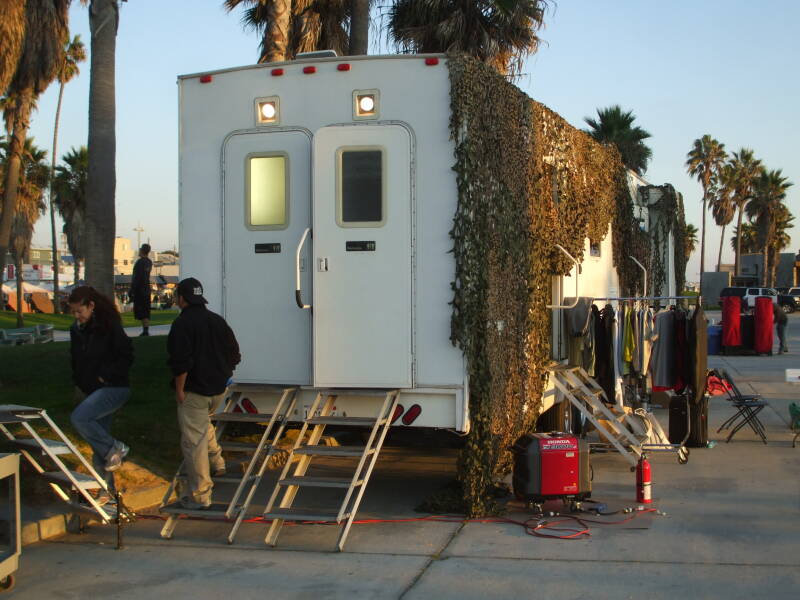
Venice Beach at sunset. During a visit to Venice Beach, California, I saw a film crew shooting a short scene along the bicycle path running along the boardwalk and beach. They wanted to get a few shots of two guys carrying surfboards across the bike path as two girls passed in one direction on rollerblades, and then a couple on bicycles passed in the opposite direction. That sounds simple enough. It took most of the day. The crew brought several large trailers to the park at the end of Windward Avenue, and intermittently blocked traffic on the path all day long. This, however, afforded a rare view inside a movie crew toilet! How elegant! But not really. See William Randolph's Heart's toilets, sinks, showers, fountains and pools for plumbing used by some of the movie stars from the 1920s into the 1940s. Charlie Chaplin, the Marx Brothers, Jimmy Stewart, Cary Grant, Clark Gable, Joan Crawford, Bob Hope, and many others. Those toilets are much nicer than these. Rose George's The Big Necessity: The Unmentionable World of Human Waste and Why It Matters is a fascinating description of sanitation conditions around the world. "2.6 billion people don't have sanitation. [....] Four in ten people have no access to any latrine, toilet, bucket, or box. [....] Poor sanitation, bad hygiene, and unsafe water — usually unsafe because it has fecal particles in it — cause one in ten of the world's illnesses. [....] Diarrhea — nearly 90 percent of which is caused by fecally contaminated food or water — kills a child every fifteen seconds. The number of children who have died from diarrhea in the last decade [1998-2008] exceeds the total number of people killed by armed conflict since the Second World War. In September 2009, Morna Gregory and Sian James published a book titled Toilets of the World. It's pretty much the same theme that you find here — photographs and commentary on other people's plumbing. The Porcelain God: A Social History of the Toilet, by Julie Horan, contends that civilization began with the toilet. Toilet: Public Restrooms and the Politics of Sharing, edited by Laura Noren and Harvey Molotch, has essays by anthropologists, sociologists, and architects on the importance of the toilet, especially for urban dwellers. Latrinae Et Foricae: Toilets in the Roman World describes the toilets of the Roman Empire from Iberia to Syria, and from North Africa to Hadrian's Wall in Britannia. Toilets, Bathtubs, Sinks, and Sewers: A History of the Bathroom, explains the history of personal cleanliness and hygiene to children in grades 5-8.
How long have my Toilets of the World pages been around? I'm not exactly sure, although they started in the mid 1990s as a single page on a Purdue University server. The Internet Archive Wayback Machine lets you see what that looked like as far back as January 17, 1999. My cromwell-intl.com domain appeared in September, 2001, although the Wayback Machine didn't notice its one enormous Toilet of the World page until January 17, 2002. Some time soon after that I split it into categories, and the collection has grown ever since. In December, 2010 I registered the toilet-guru.com domain and moved the pages to a dedicated server. If you're not bored yet, you might be interested in (or at least tolerate): |
|
|
|
|||||||||
|
|||||||||
|
| © Bob Cromwell May 2012. Created with /bin/vi and ImageMagick, hosted on Linux with Apache. Privacy policy available here. |