
The Sacred Island of Delos and its Plumbing
The Sacred Greek Island of Δήλος / Delos
The Toilets of Faith
include the plumbing at various temples, shrines, and
churches, while the
Historical Toilets
display man's lavatorial accomplishments from the prehistory
of the Neolithic or late Stone Age into the 21st Century.
The water supplies, latrines, and sanitation on the island
of Delos
(that is, Δήλος)
in the Aegean fit into both categories.
It's ancient Greek toilets and other plumbing,
and Delos was an enormously popular religious site.
Let's visit this ancient Greek island.
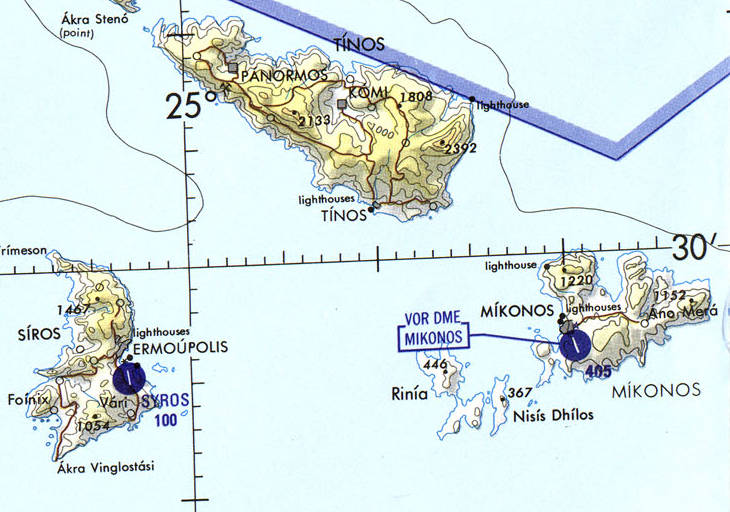
Aeronautical chart of the northern Aegean Sea around Delos, full map available from the Perry-Castañeda Library Map Collection at the University of Texas at Austin. "Dhílos" is meant to better represent the modern Greek pronunciation, with the "dh" representing Ð or ð, the voiced "th" in the English words this or that. Νησί or Nisís is Greek for Island.
The island of Delos is at the center of the Cyclades island group in the Aegean Sea. It's one of the most important mythological and archaeological sites in Greece. You can visit the site on a day trip from the nearby island of Mykonos. In fact, without your own boat, a day trip from Mykonos is the only way to get to Delos.
The Cycladic Islands or the Κυκλάδες are mostly the peaks of submerged mountainous terrain, while Milos and Thera (or Santorini) are volcanic islands. The island group's name comes from its roughly circular form centered on Delos. A distinctive Neolithic culture combining elements of the cultures of western Anatolia and mainland Greece arose in the western Aegean islands before 4000 BCE. The Cycladic culture arose out of that, in the late Neolithic and Early Bronze Age.
Delos has been inhabited since the 3rd millennium BCE, when it was established as a holy sanctuary. By 2000 BCE, the merged Cycladic and Minoan civilizations had established a settlement at the peak of the highest point on Delos. The Ionians settled most of the Aegean islands in the 10th and 9th centuries BCE, bringing the cult of Λητώ or Leto, the mother of Artemis and Apollo.
Delos was a major cult center from 900 BCE to 100 CE. It went through a number of cycles in which businesses would be established around the pilgrimage activity. At times it had the largest slave market in the region, and a number of large homes were built during these periods. But then the island would be "cleansed" of economic activity and re-dedicated purely to religion. Whether religious or commercial, Delos was the busiest island in the Aegean.
The large harbor, seen in the distance below, supported the bustling trade. During the periods of business and trade, ships traveled between Delos and other islands, the mainlands of Greece and Asia Minor, and other Eastern Mediterranean ports.
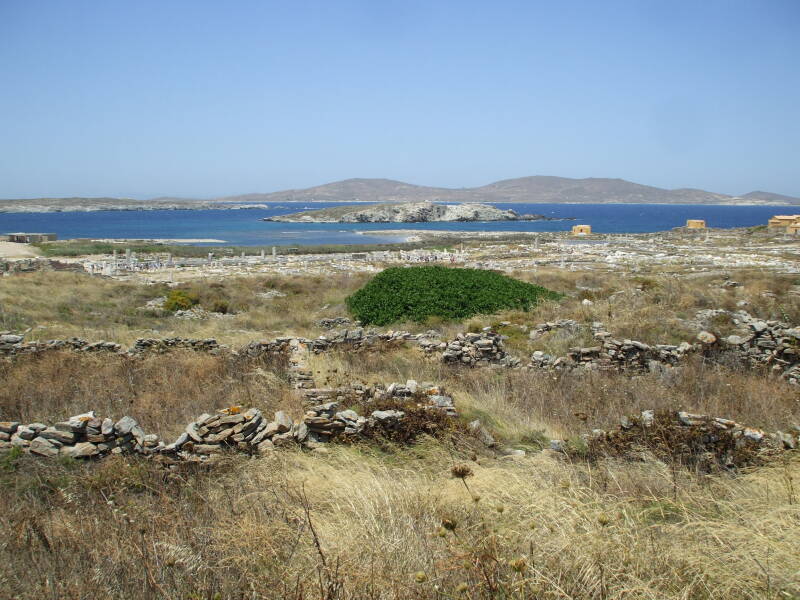
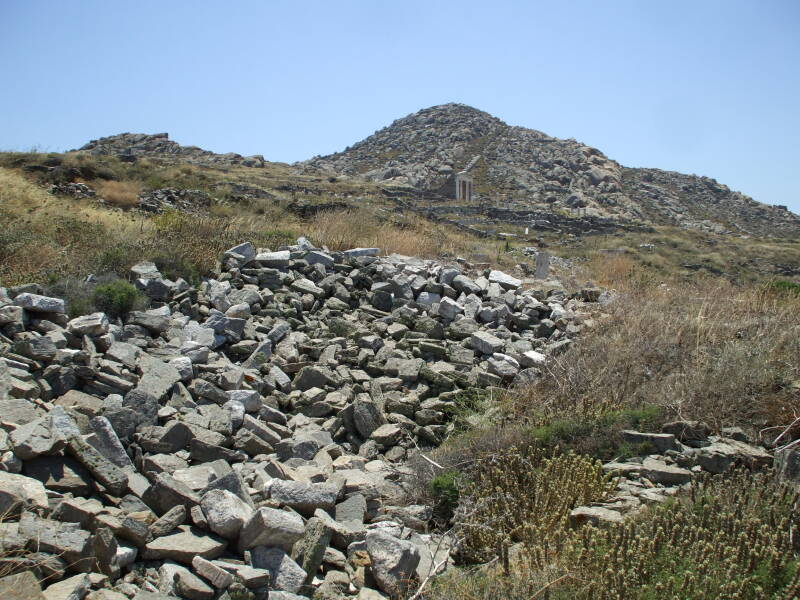
Two conical mounds are visible from its Sacred Harbor, the higher one is Mount Kynthos. High places were often sacred in the ancient world. These were one of the earliest holy sites, identifying the landscape as holy to a goddess of a pre-Greek religion.

Amazon 0241306469

Amazon 1788688295
Much later, in Mycenaean times (1600&ndashy;1200 BCE), Delos was believed to be the birthplace of the deities Apollo and Artemis.
After the Greek Dark Ages and the emergence of the Ancient Greek culture, Delos became dedicated to the Ancient Greek religion.
During the business periods when Delos was a major trading port, the Sanctuaries of the Foreign Gods were constructed along the path to the peak. The merchant communities from Egypt, Syria, and other trading nations around the Eastern Mediterranean erected temples to their deities in this district.
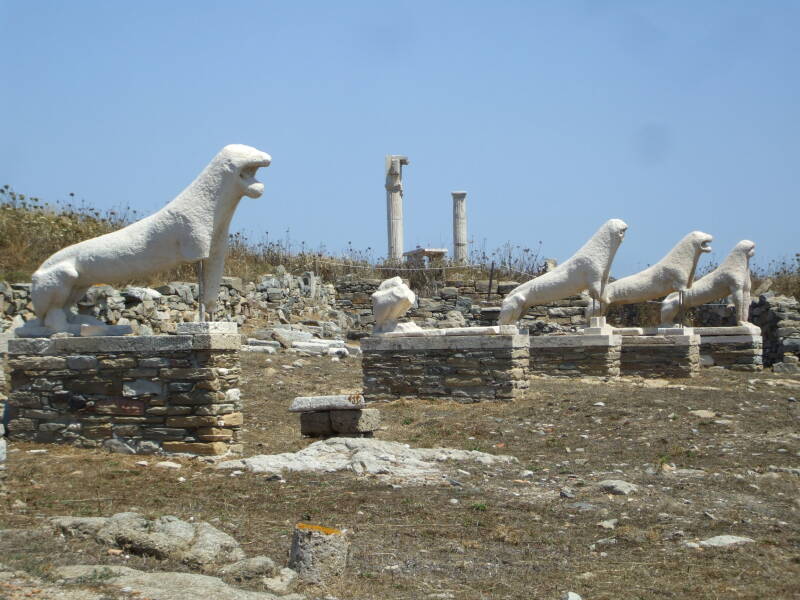
These are the famous lion statues on the Terrace of the Lions near the Sanctuary of Apollo. They were dedicated to Apollo shortly before 600 BCE by the people of Naxos.
The Delian League started meeting here after its foundation in 478 BCE, after the Persian wars. It was the primary association of Greek city-states.
The Lake House in the Delos city center had only recently been fully investigated when I first visited in 2010. Here is its floor plan, from a preliminary 1922 study.
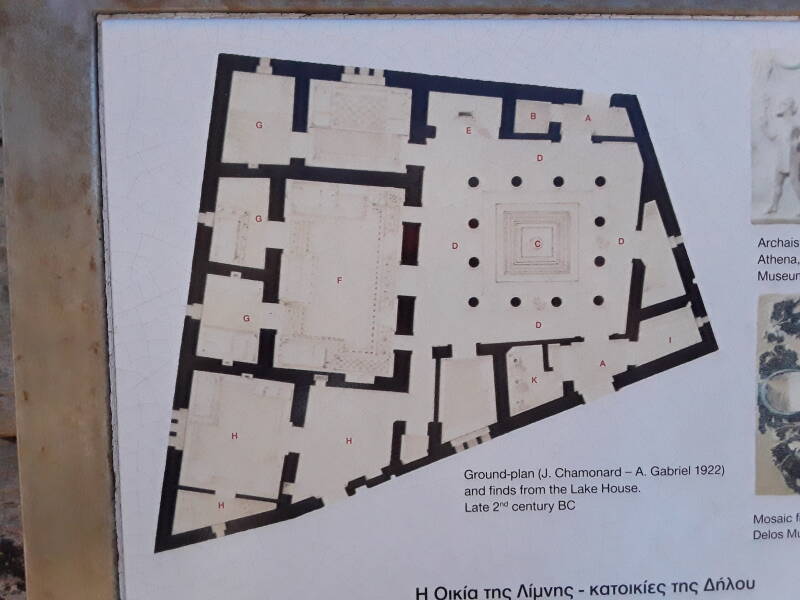
| A | Entryway |
| B | Thyroreion, occupied by the thyroros or doorman |
| C | Aule, central open-air atrium |
| D | Peristyle, columns around the aule |
| E | Exedra, summer room open in front |
| F | Andron or oikos, formal reception room |
| G | Men's bedrooms, women's and children's rooms were upstairs |
| H | Xenon, guest rooms |
| I | Apochoreterion, latrine |
| K | Mageireion, kitchen |
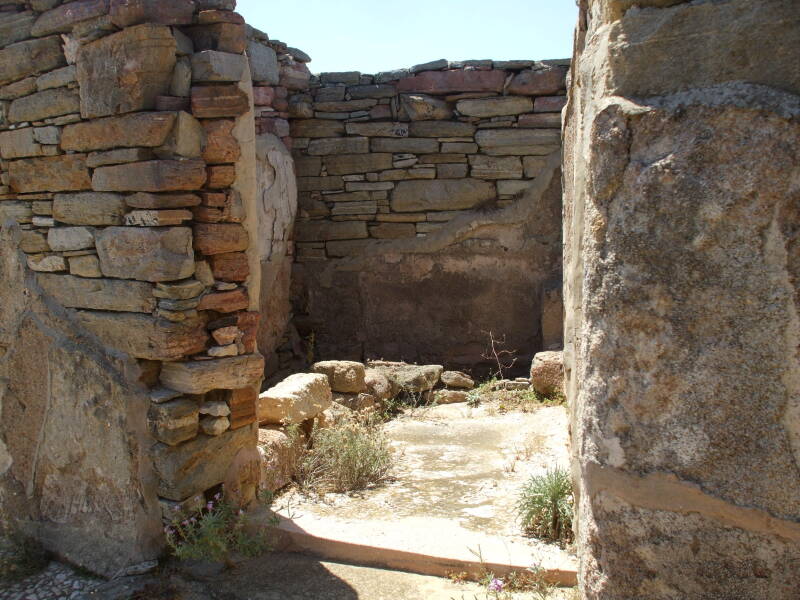
Above is a view of the αποχορετεριον, the apochoreterion or latrine. As the sign there says,
Next to the secondary entrance, far from the main rooms, is the apochoreterion (latrine) and the mageireion (kitchen, or cookhouse). A closed door isolates these two areas from the atrium to keep the masters of the house from being disturbed by any unpleasant smells. The baths were in a separate room with clay bathtubs.
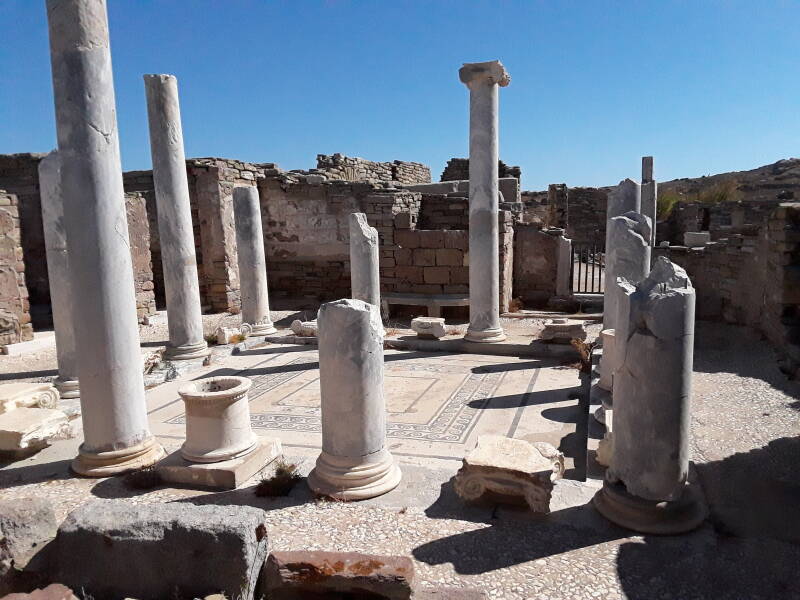
Here's a view from the entryway next to the apochoreterion or latrine across the aule and peristyle to the primary entryway on the other side of the house.
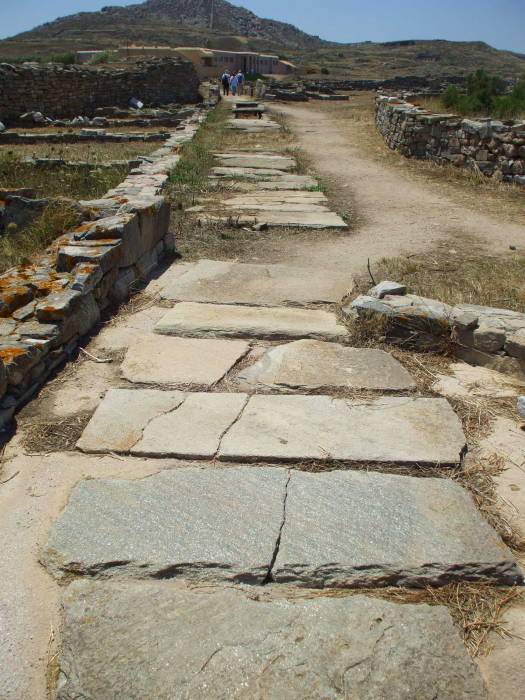
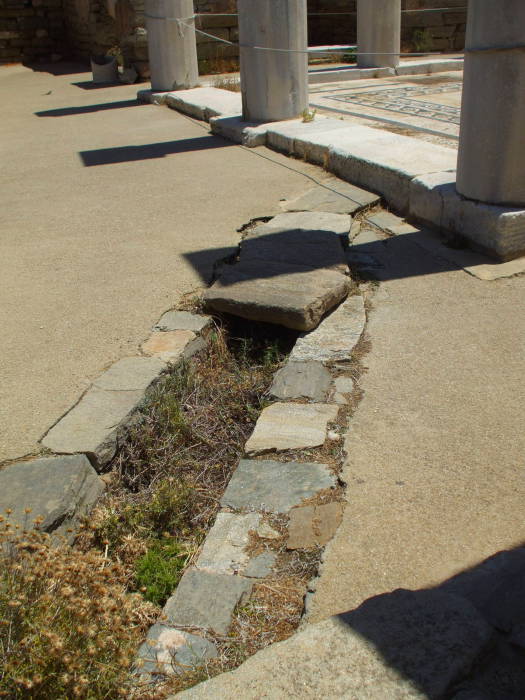
The road from the Sacred Lake district toward the twin mounded peaks is made from broad paving stones. A sewer channel runs beneath this road.
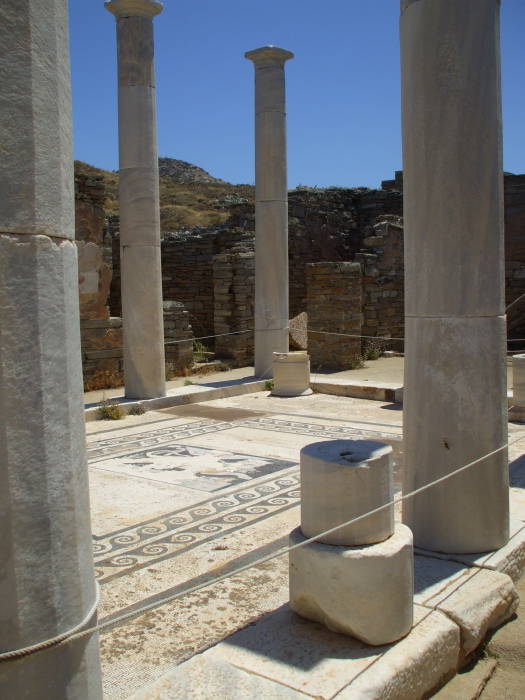
The House of the Trident is one of the impressive homes built during the periods when permanent settlement was allowed on Delos. Here you can see the mosaic tile of its central atrium.
Below you see two views of its large latrine drain.
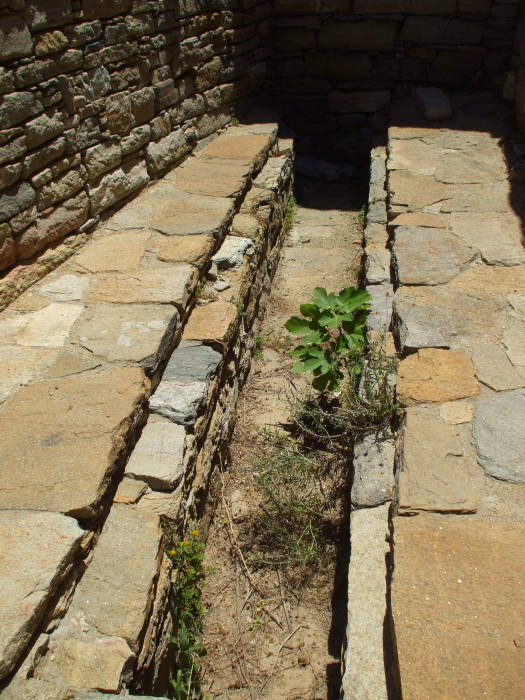
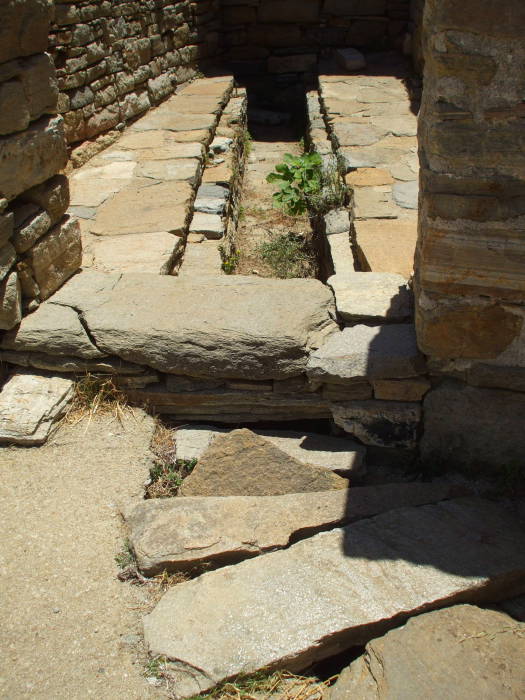
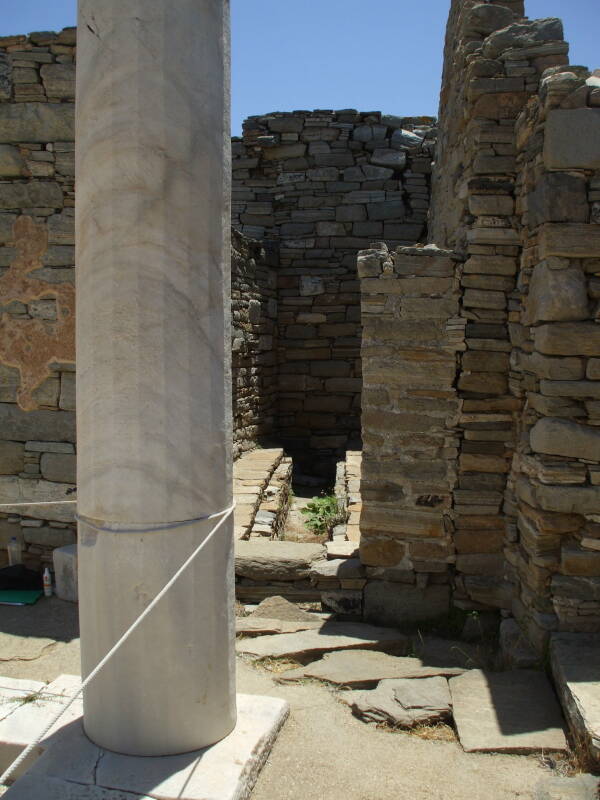
A water supply from further up the hill washed the waste down through this channel, under the atrium floor, and out underneath the front of the house to join the sewer line running under the paving blocks of the street.
Return to Delos
The pictures you've seen so far on this page are from a visit in 2010, when I was taking my parents on a trip. That limited the time and strenuousness of what I could do and see.
I returned in 2021, to see more. Mykonos, the base for a visit to Delos, had significantly changed in the intervening eleven years. The moderately priced hotel where we had stayed had been converted into a high-end jewelery store. Chora, the main town, had a greater per-square-kilometer density of very high-end jewelry and top designer clothing shops, and champagne-and-cocktail bars, than anywhere I had seen or even seen about.
Delos was still Delos.
Get a quality map. I purchased the Anavasi map in a book shop in Mykonos Chora, the main town. It shows the islands of Mykonos, Delos, and Rheneia on one side in 1:25,000 scale. On the other side it has the site of Delos at 1:1250, with detail down to individual structures and isolated wall fragments.
Amazon 9609412386

Amazon 1905131356
The names in the following can all be found on that map, and should be found on other good references like Blue Guide Greece: The Aegean Islands. The simple map you can get with your boat ticket will not include all these locations.
I also consulted two research reports by
École françise d'Athènes,
the French School at Athens:
Délos — Latrines — 2014
Délos — Les latrines — 2016
Public Latrine at the Agora of the Italians
These drain lines are associated with a public latrine along the west side of the Agora of the Italians. Just beyond them on the left half of the picture is the Letoön, a shrine to the goddess Leto.
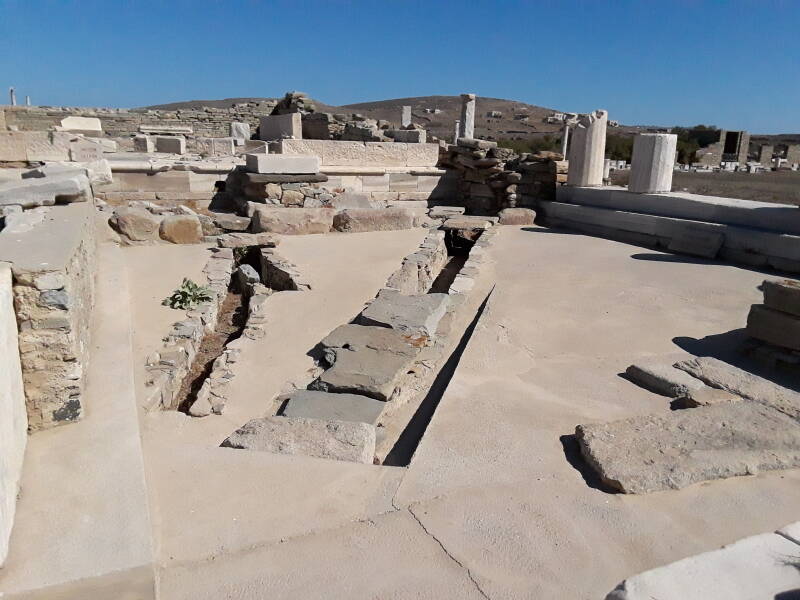
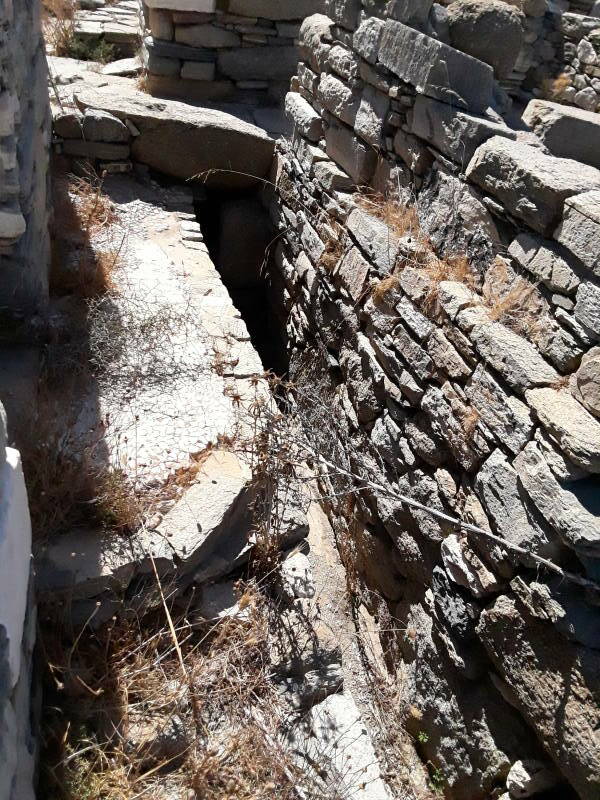
Here are views either way along the drain closer to the agora.
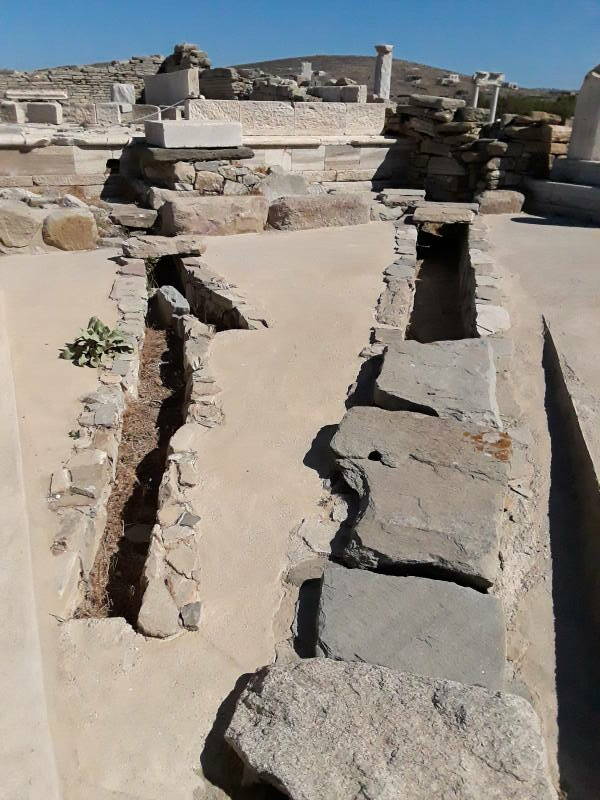
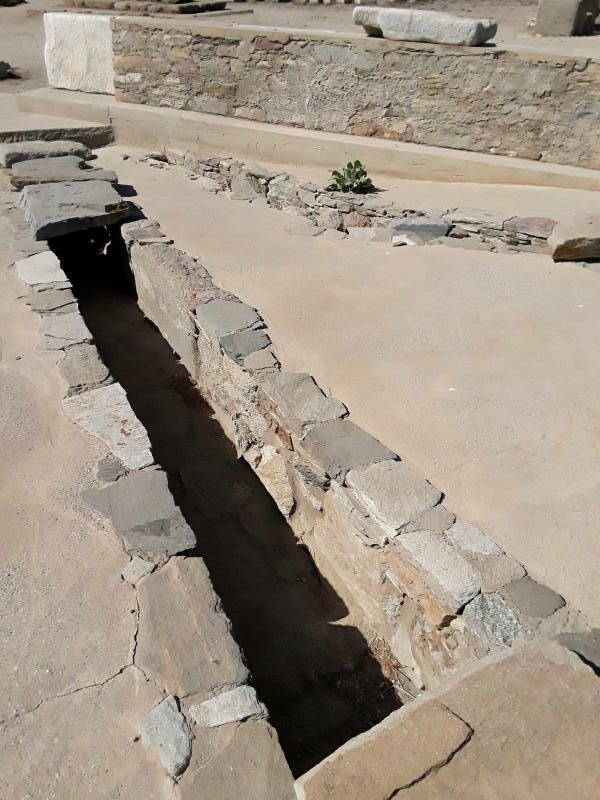
The latrine itself is between the Letoön and the Agora. You entered at the door in the center of the wall to the right in these views. The waste line ran most of the way around the rectangular room. between the low roughly C-shaped low wall and the walls of the room. The rest of the seats are long gone, we just see the waste channel here.
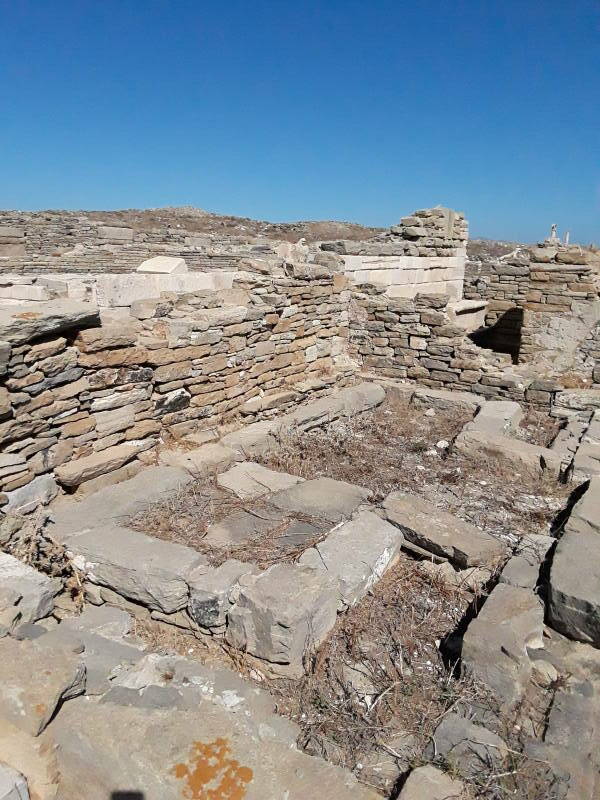
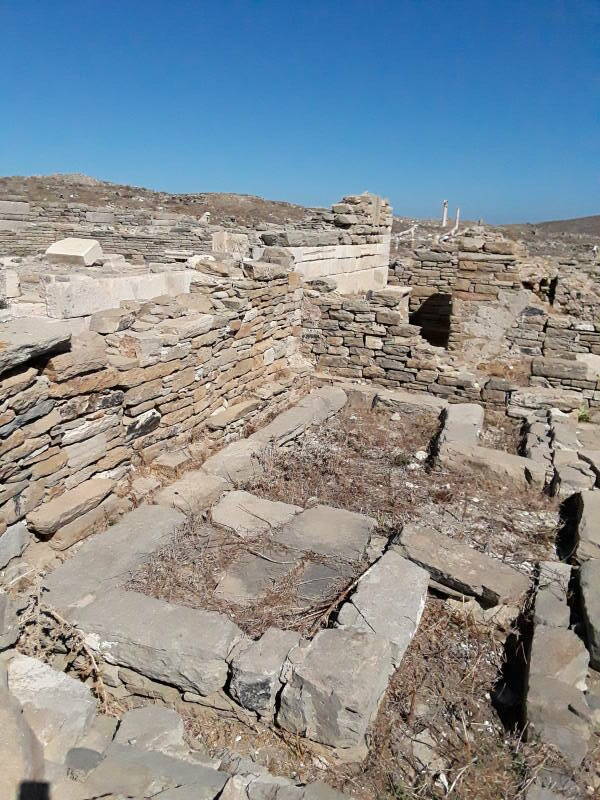
Near it is what very likely was a large wash basin.
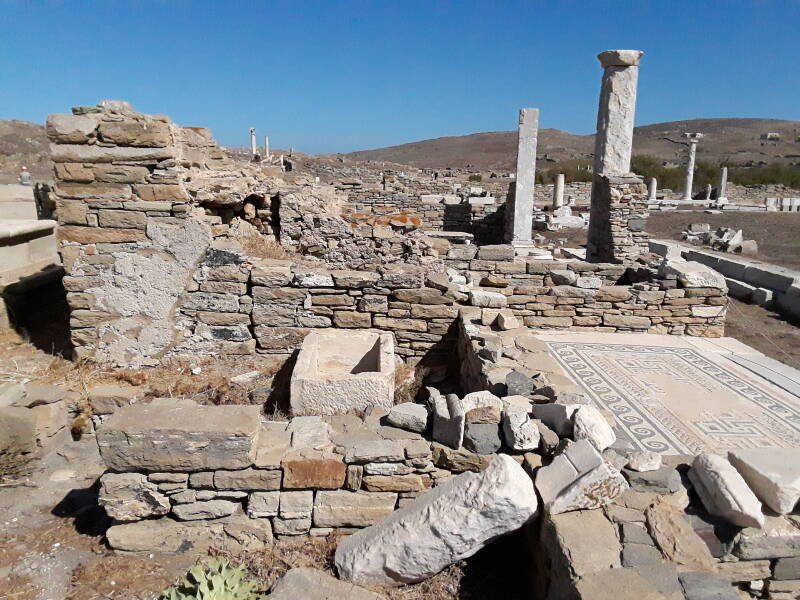
There's a nice mosaic at the entrance to the latrine and bath facility. The Latin dates this to Roman times, up to the first century BCE.
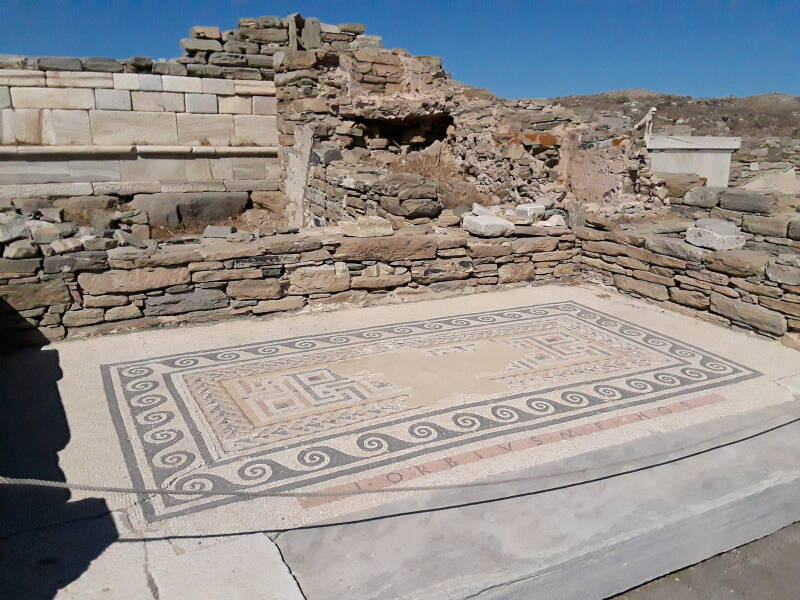
The Roman-era bath is at the northwest corner of the Agora of the Italians. There are more tell-tale Latin inscriptions.
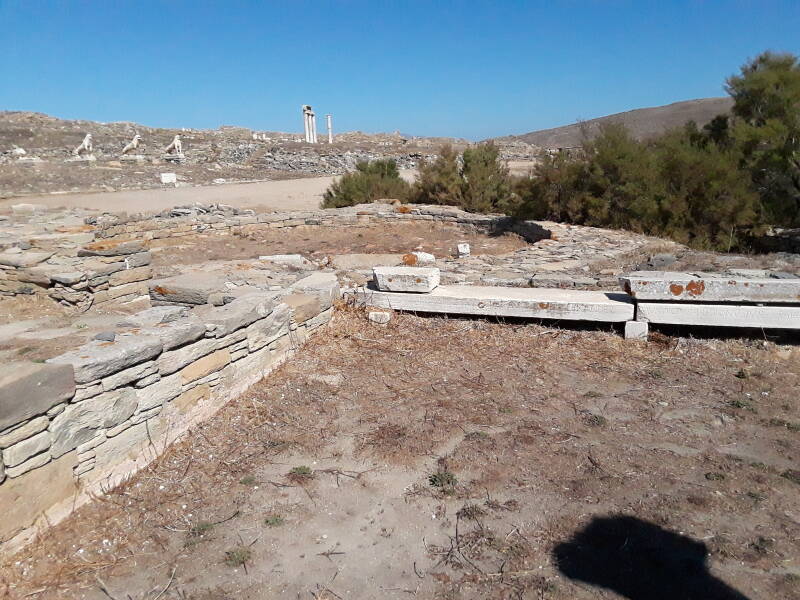
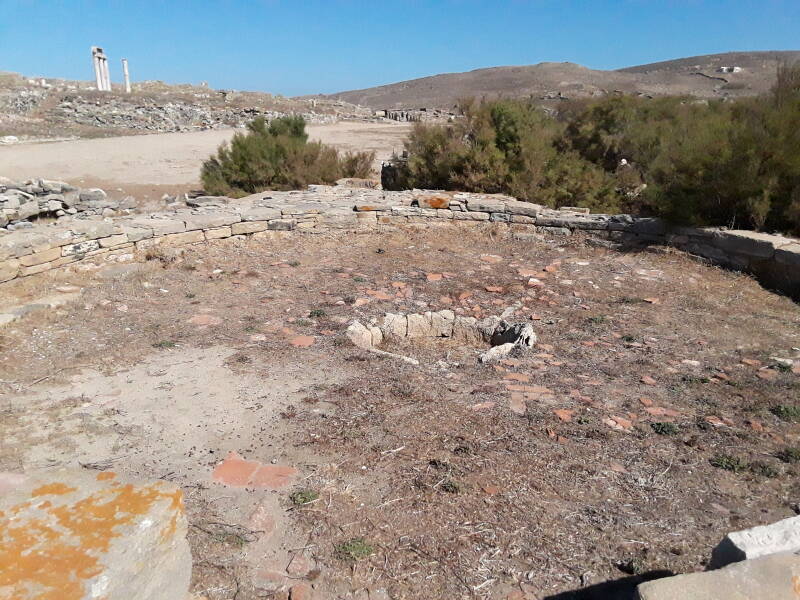
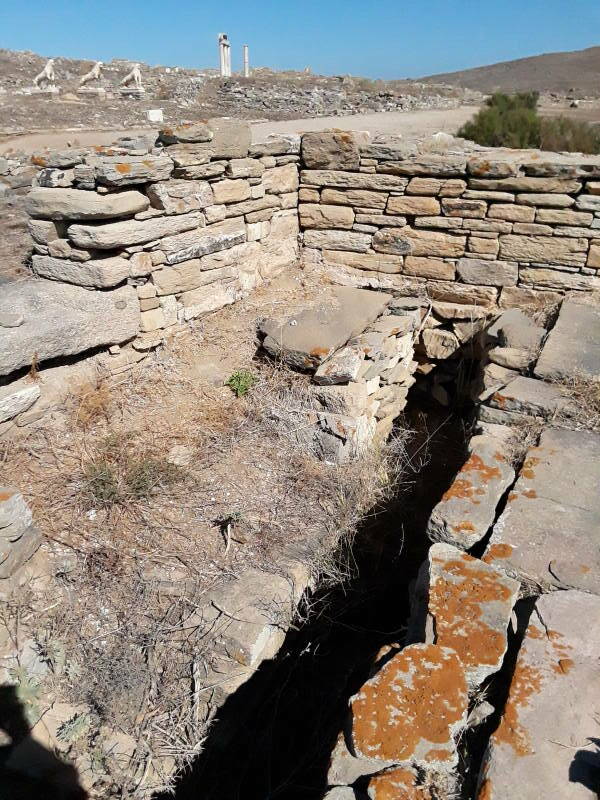
There are more drains along the wall of a smaller interior room, very likely further latrines just for the bath patrons.
Skardana Quarter
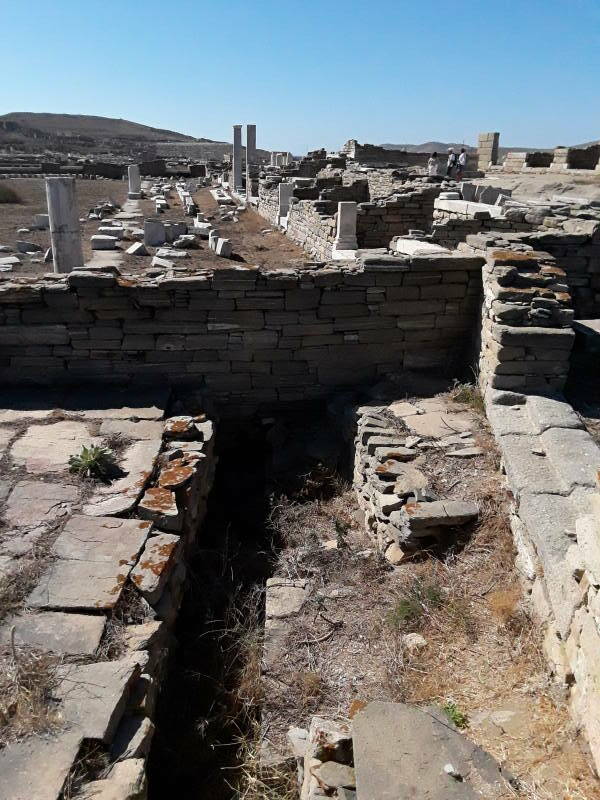
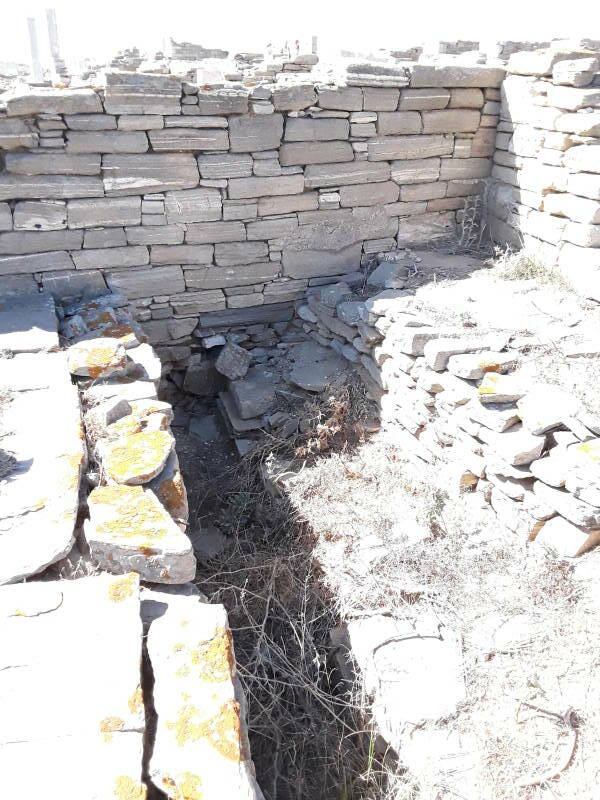
The Skardana Quarter is north-northwest of the Terrace of the Lions. Several houses there have visible drain lines and latrines.
Like the Lake House, the latrines tended to be in a corner of the house near the entryway. That made it easy to connect to the municipal drain, and reduced the odor within the living area of the home.
Lake Palaestra
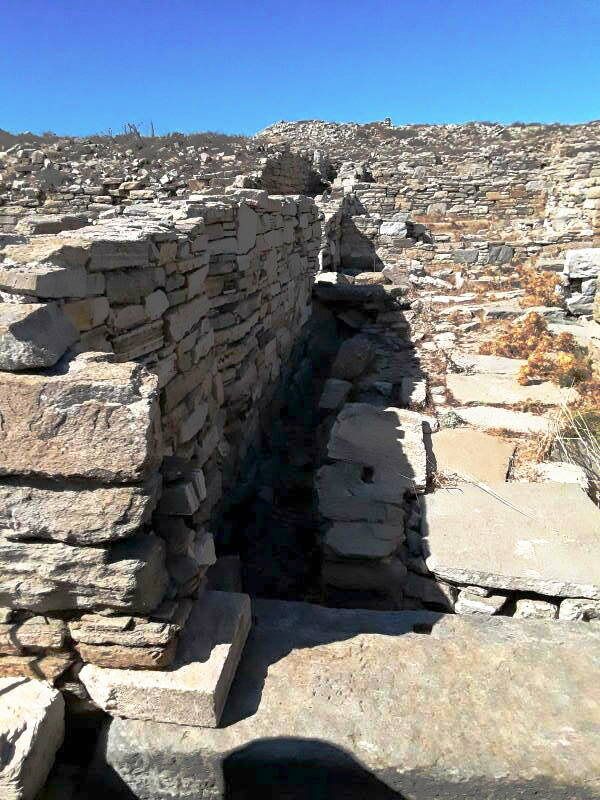
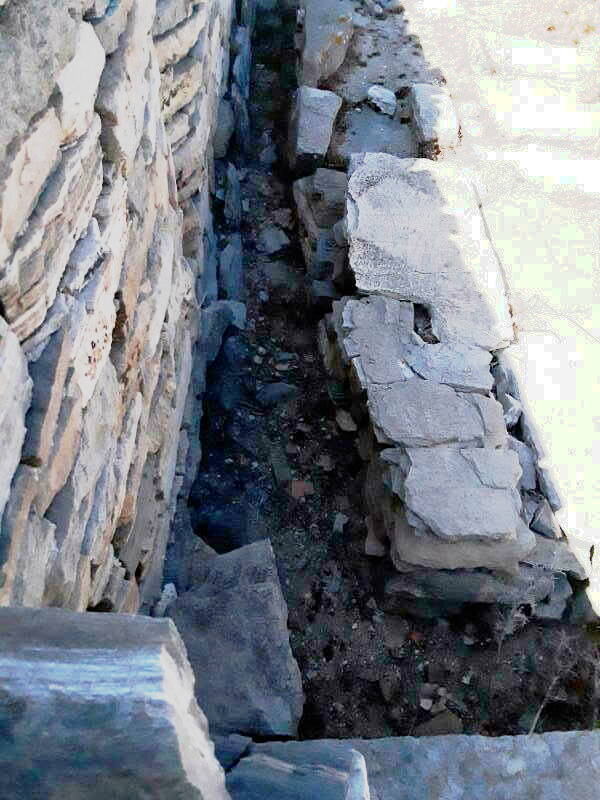
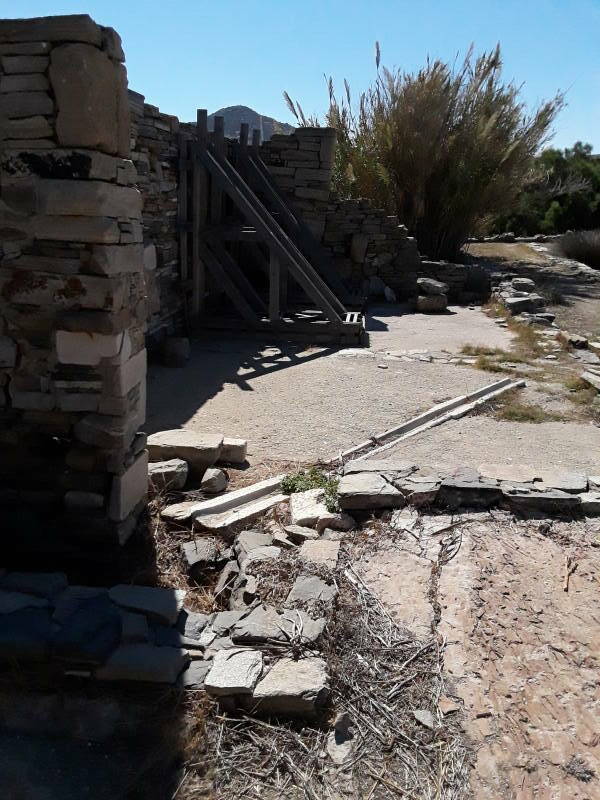
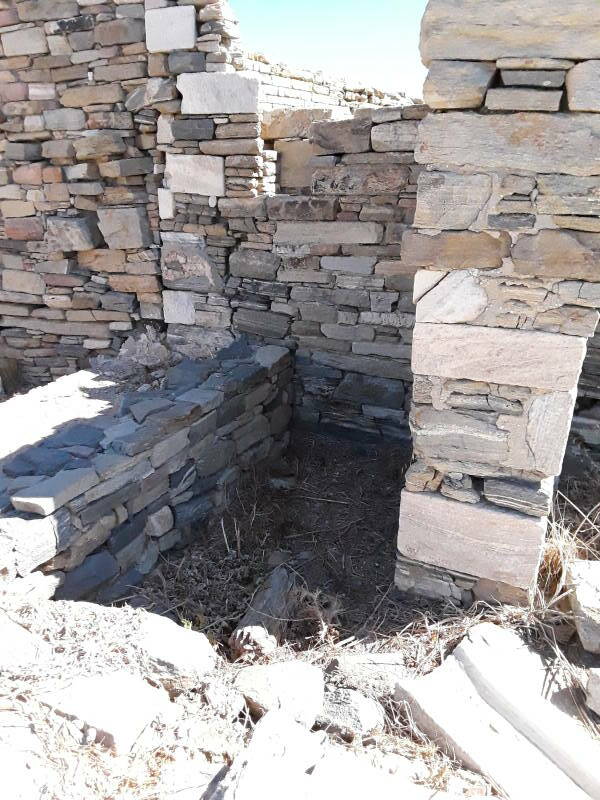
The Lake Palaestra was built in the 3rd century BCE, associated with the old gymnasium. It occupies about 1,300 square meters, having a central courtyard with a cistern. That courtyard was surrounded by exercise areas; exedrae for conversations, lectures, and lessons; dressing rooms, cloakrooms, baths, latrines, and so on. It has a few remaining drain and latrine features.
Theatre Quarter
The Theatre Quarter was on sloping terrain with curving streets. It was an elite area, with expensive prices, so the houses had multiple stories in their small irregularly shaped areas. Many were examples of architectural showmanship.
MinoanPlumbing
However, while the Delians had plumbing, it wasn't great. The Minoans during their civilization's peak of 2000–1450 BCE had far superior plumbing with connected supplies and drains.
Many of the citizens of Delos had to carry in water to pour into the waste channel to flush their toilets. And then, many of them would have to manually empty the waste channels. Or more likely, of course, have their servants or slaves do that.
In other cases, the waste channel in the house latrine was filled and flushed from the municipal sewer line. So, your home's latrine was downstream from those of many other houses.
The French studies referenced above had also investigated the paleoparasite situation. They discovered parasitic pathogens affecting humans in latrines throughout the entire site. The parasitic fauna was dominated by the roundworms Ascaris lumbricoides and Trichuris trichiura, but there were many others.
The researchers attribute the parasites to the influx of people from all around the Mediterranean. But the simple presence of foreigners doesn't cause transmission. There must have been some fecal-to-oral pathway caused by the imperfect sanitation. Well, when your latrine is downstream from those of hundreds of other people's, and your kitchen is right across the entryway from your latrine, waste and worm eggs can get tracked around.
There were a lot of drain lines, though. The reconstructions have preserved many of them. They ran under streets, through narrow passages between houses, and under the floors of houses.
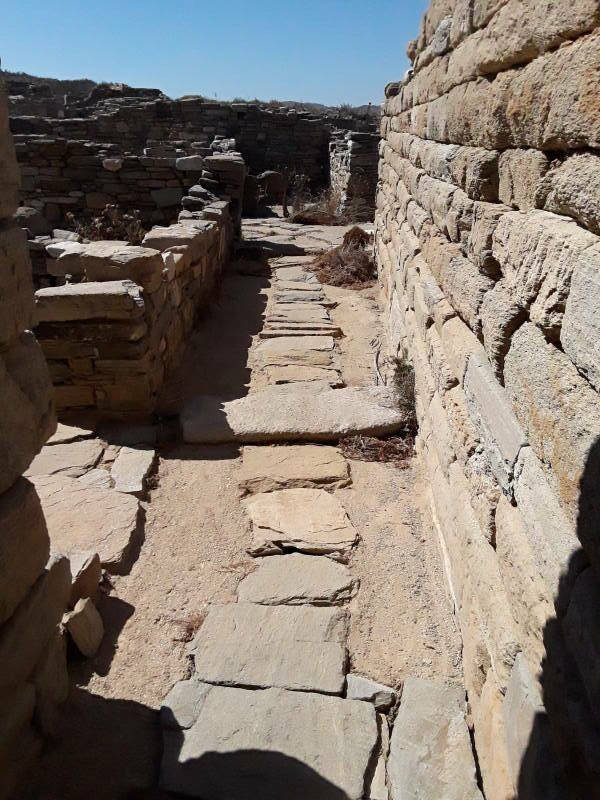
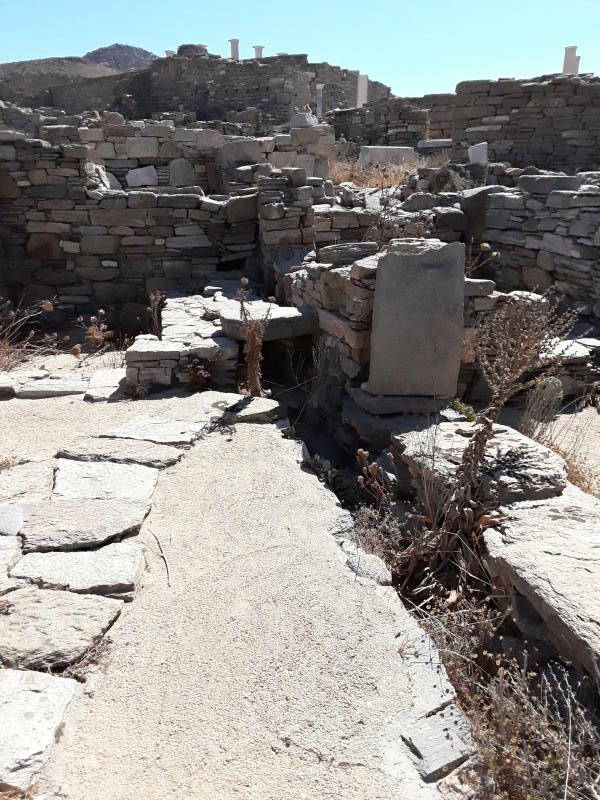
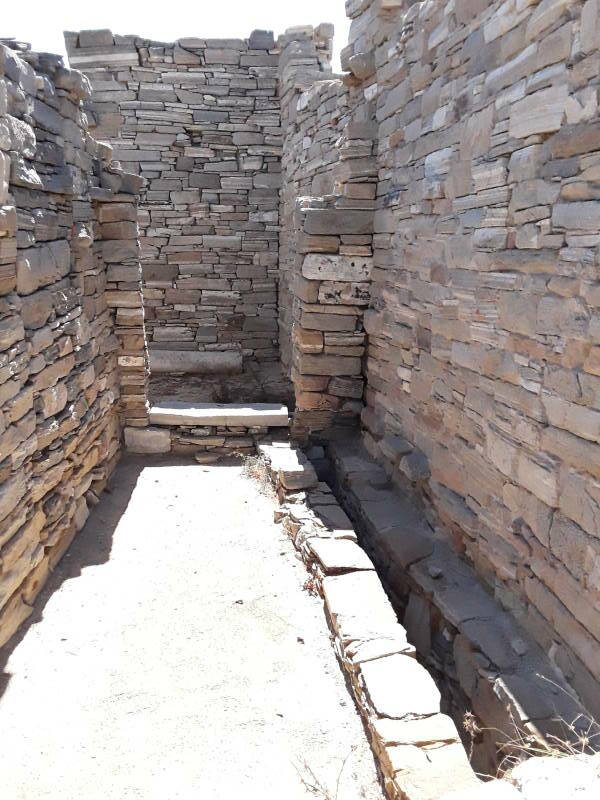
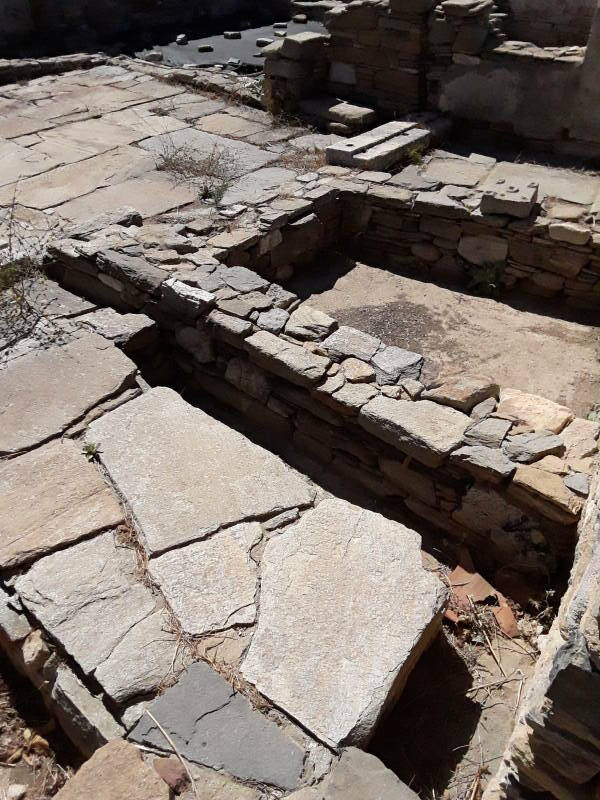
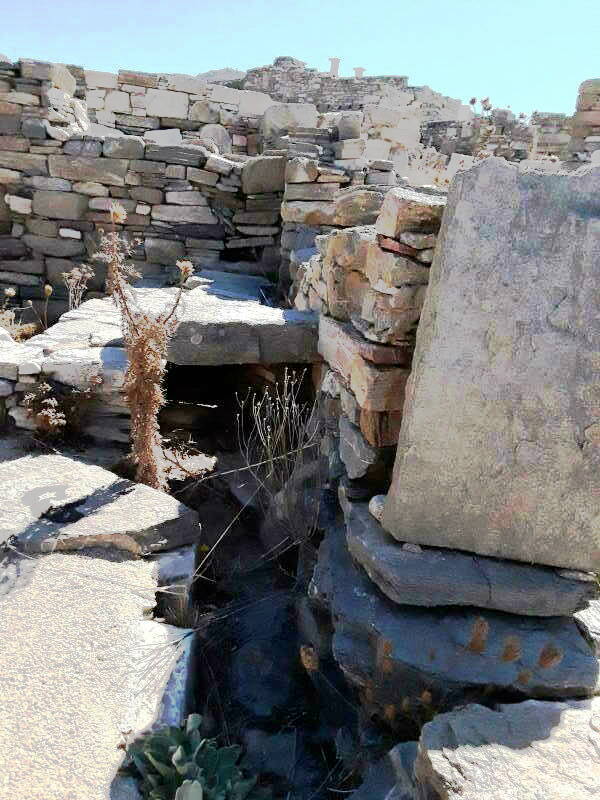
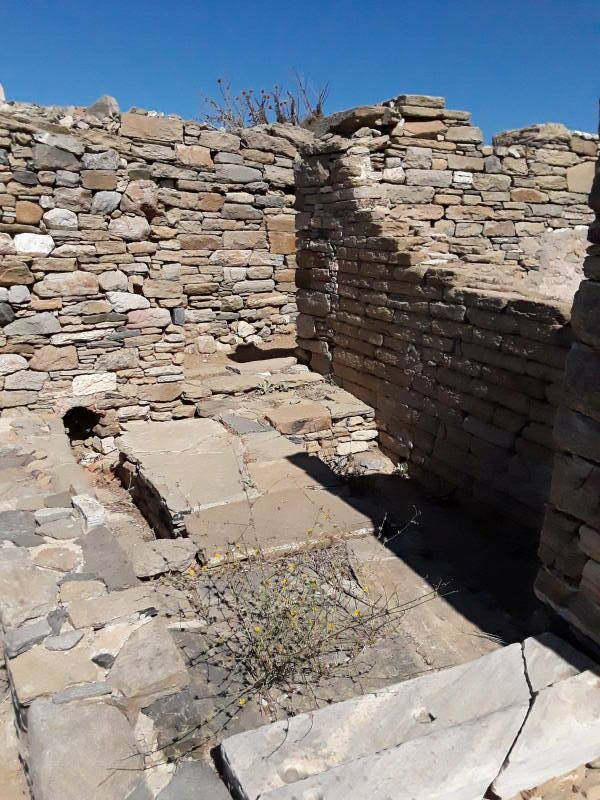
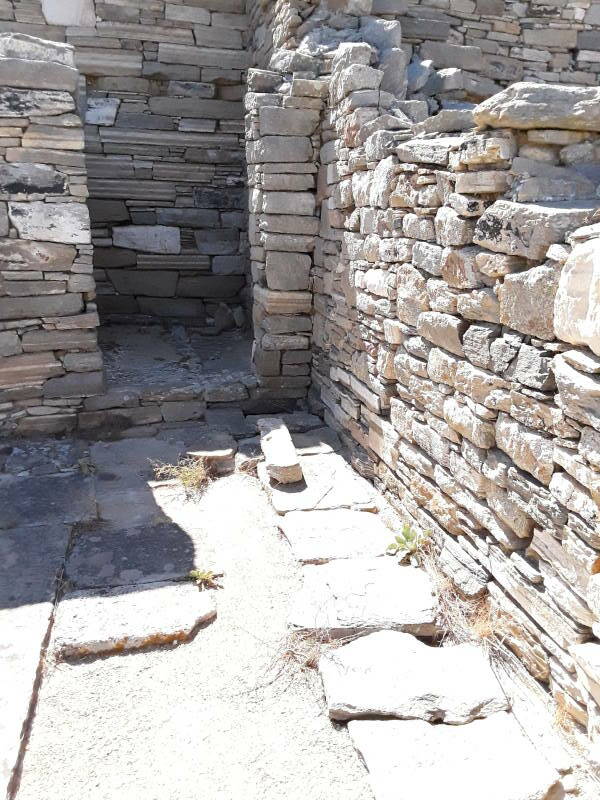
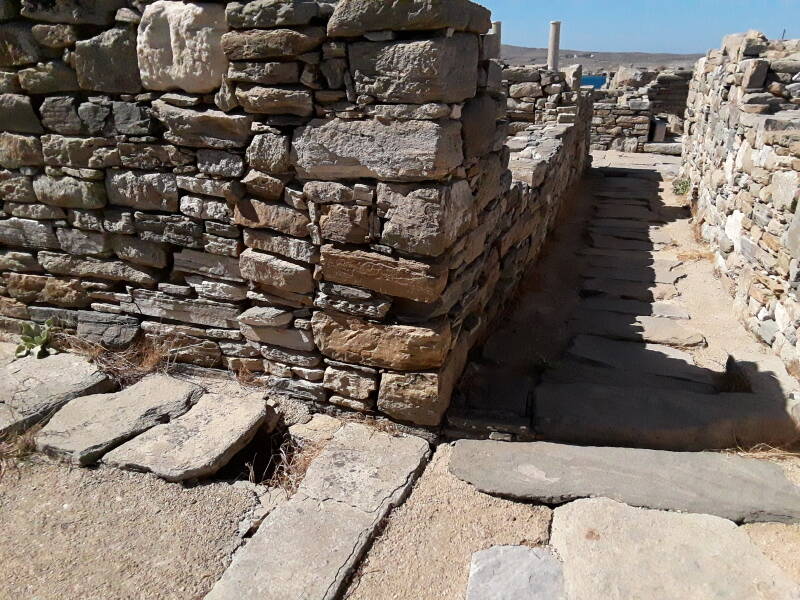
The House of Cleopatra has several drain lines and the remains of a latrine. It's one example out of many of a house whose latrine waste channel is downstream, fed by the flow from latrines in other houses.
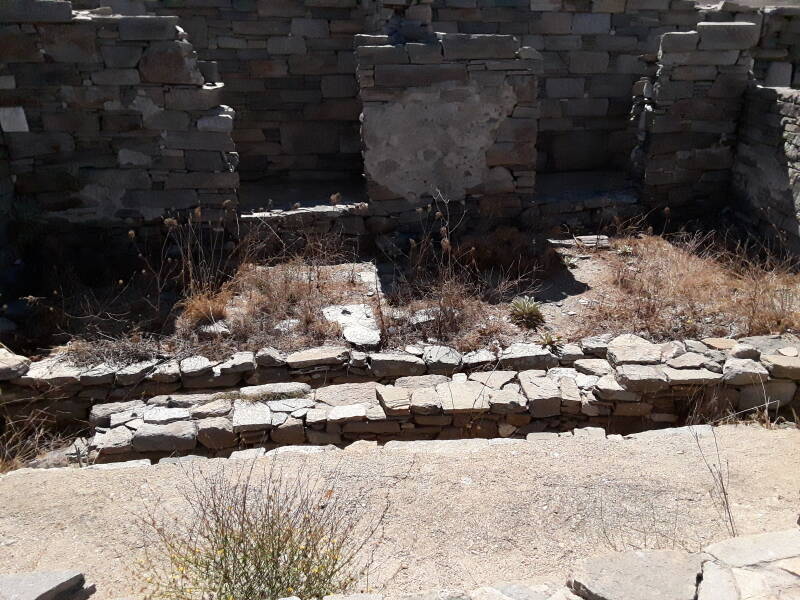
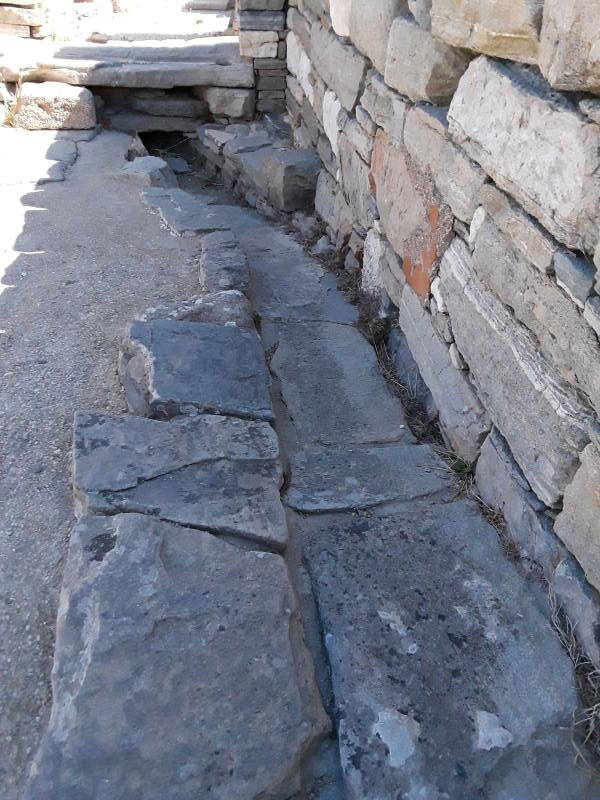
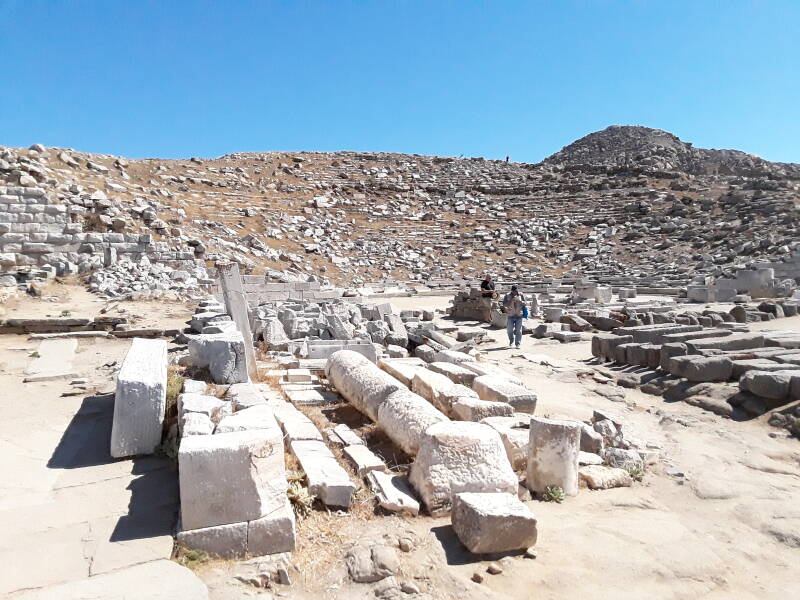
The Theatre itself was used as a catchment basin, with rain water collecting in large cisterns to either side.
The first large cistern below is immediately to the north of the theatre.
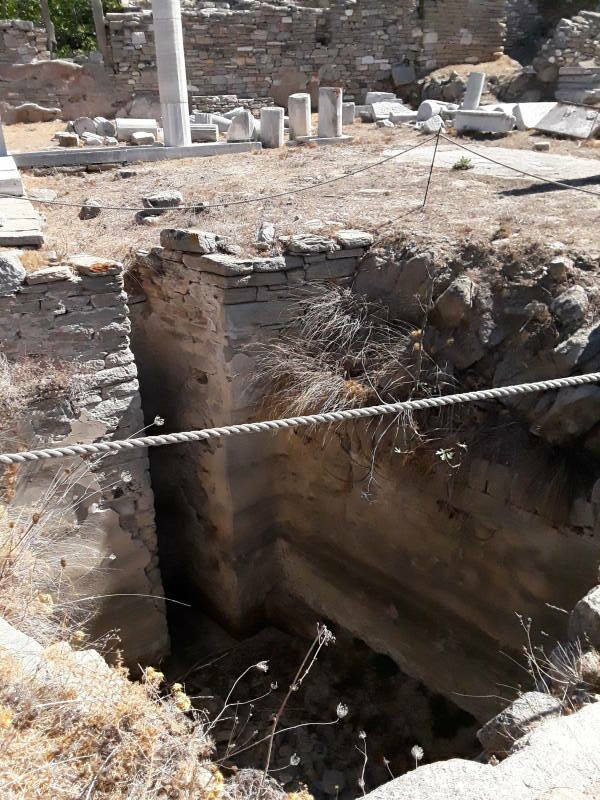
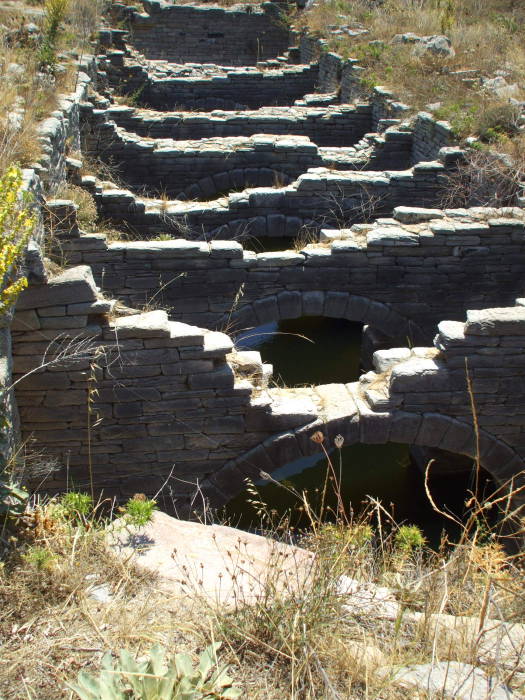
The above series of arches forms a large public cistern for collecting and storing what water is available. It would have been roofed over so it appeared to be just another plaza.
As on all the Cycladic islands, there isn't much rain here. In recent years the average monthly rain in Mykonos, measured in millimeters, is:
| Jan | Feb | Mar | Apr | May | Jun | Jul | Aug | Sep | Oct | Nov | Dec |
| 75 | 66 | 36 | 33 | 1.1 | 0.2 | 0 | 0 | 7.7 | 29 | 36 | 67 |
The Hostelry is a large structure with several rooms just south of the theatre. It is thought to have housed religious pilgrims and other visitors to the island. It is built around its own large cistern, 10 meters deep.
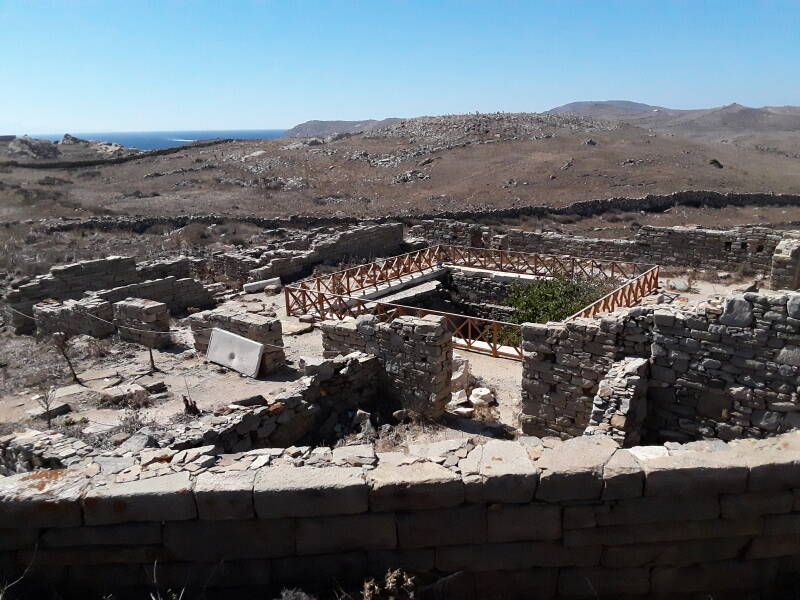
The House of the Dolphins, named for its central mosaic, has a grand entrance. Its latrine is just inside, to the right. Its waste channel extends around three sides of the room, the only such private latrine at Delos.
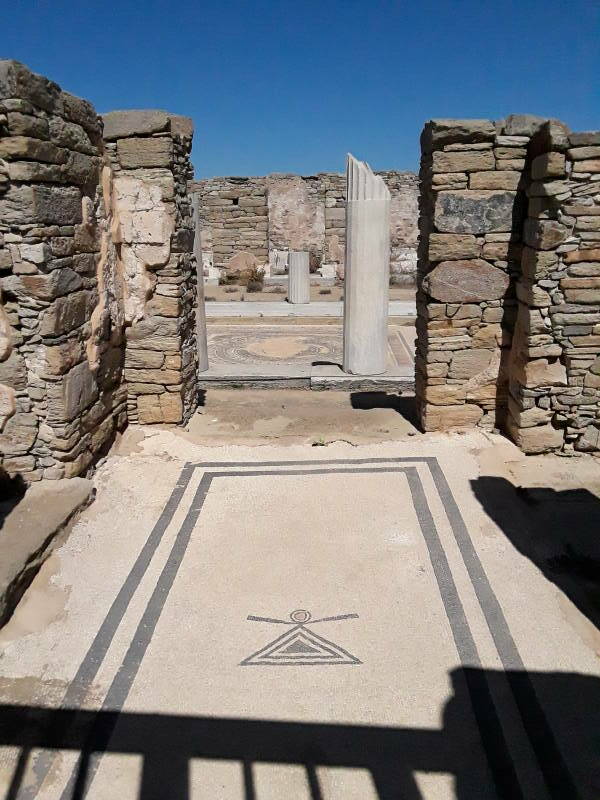
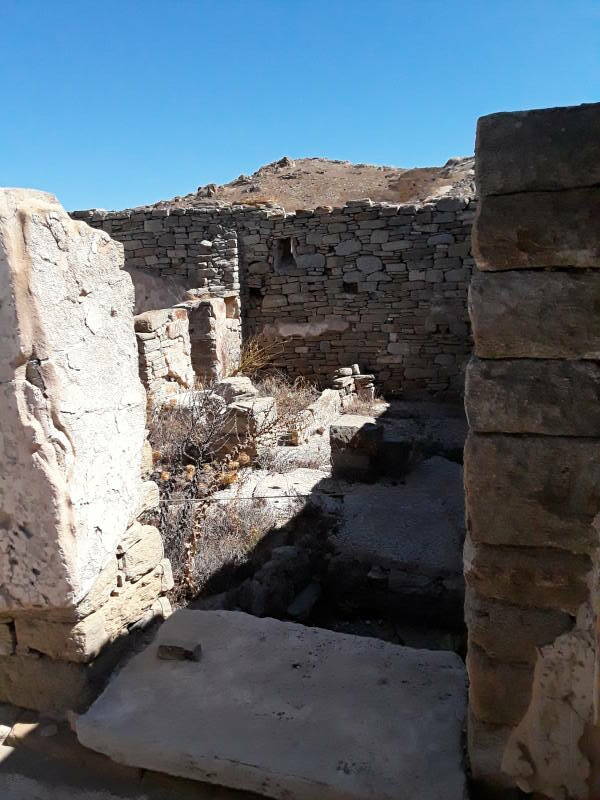
Sanctuary of the Foreign Deities
Further up the slope you reach the Sanctuary of the Foreign Deities. Specifically, the Egyptian Isis, Serapis, and Anubis, and the Syrian Hadad and Atargatis. There's a grand view of much of the site.
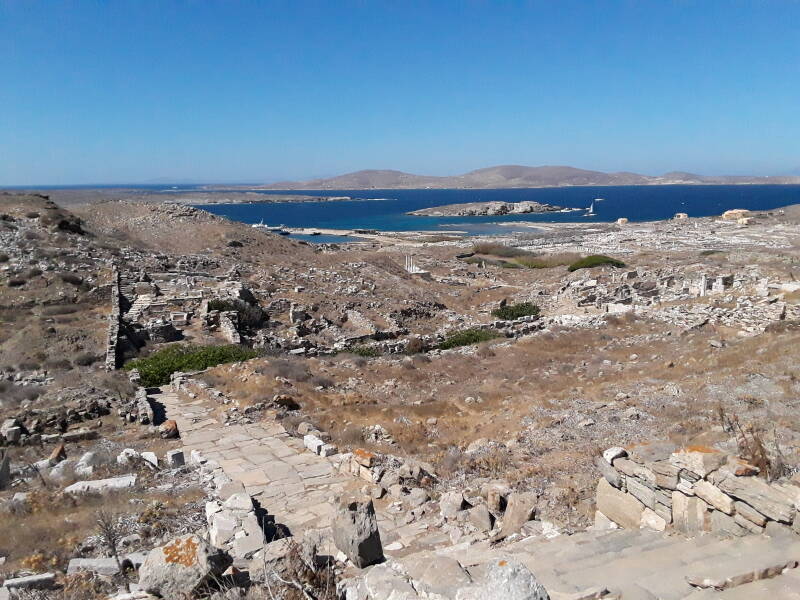
Here you can find traces of a very unusual installation: a public latrine within the confines of a religious sanctuary.
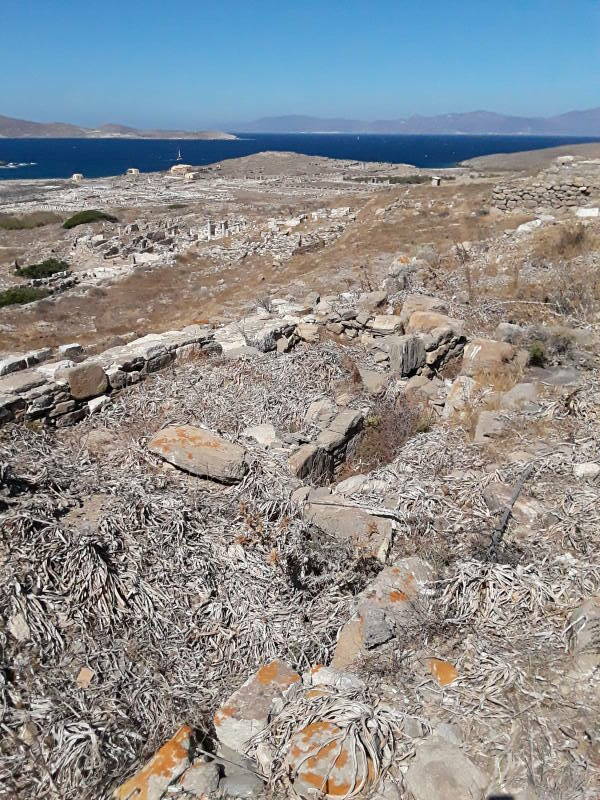
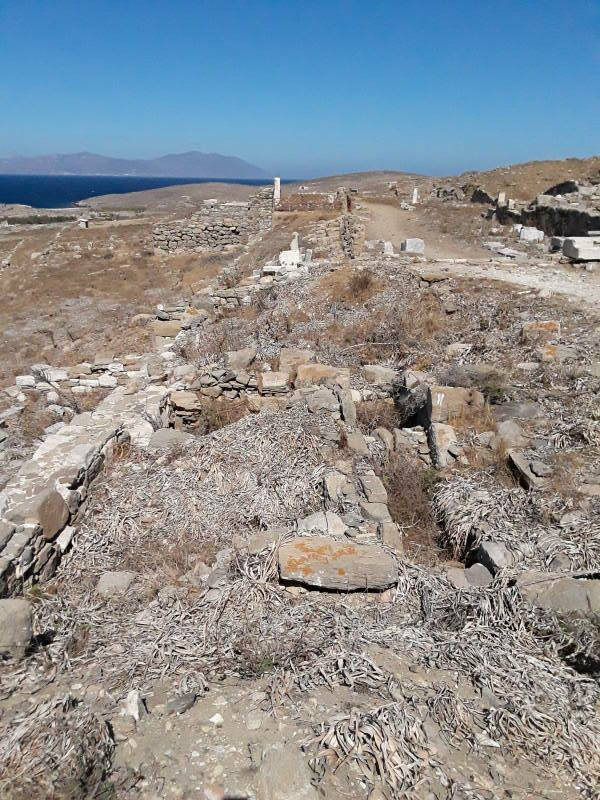
Inopos Quarter
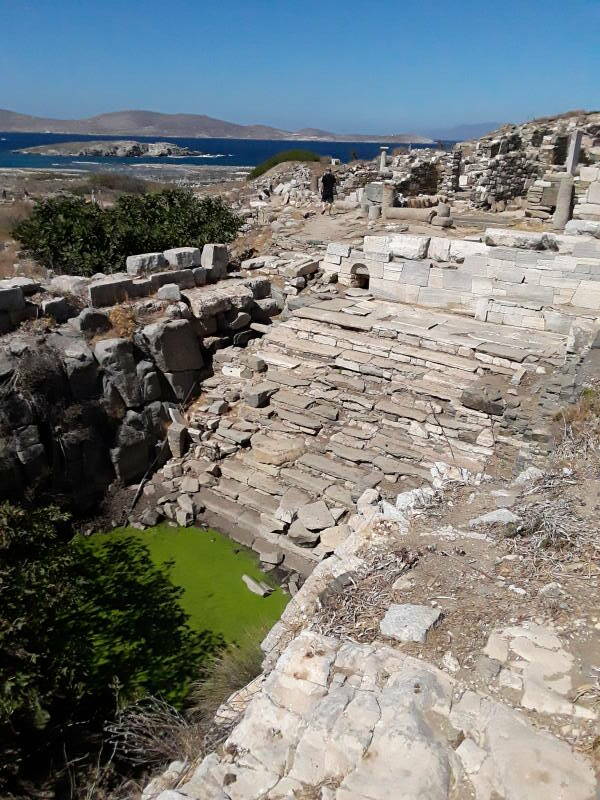
The Inopos Reservoir collected water that ran down from Mount Kynthos. When you do manage to collect water on Delos, it can quickly go bad.
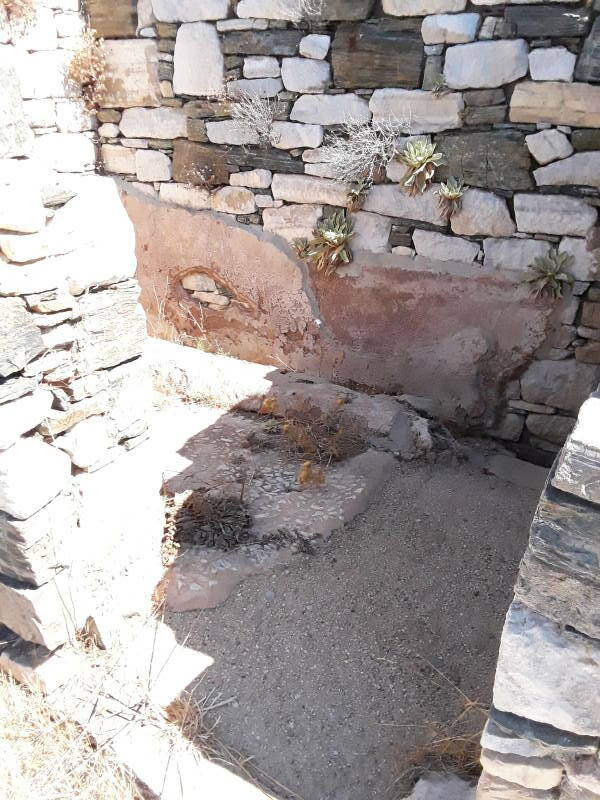
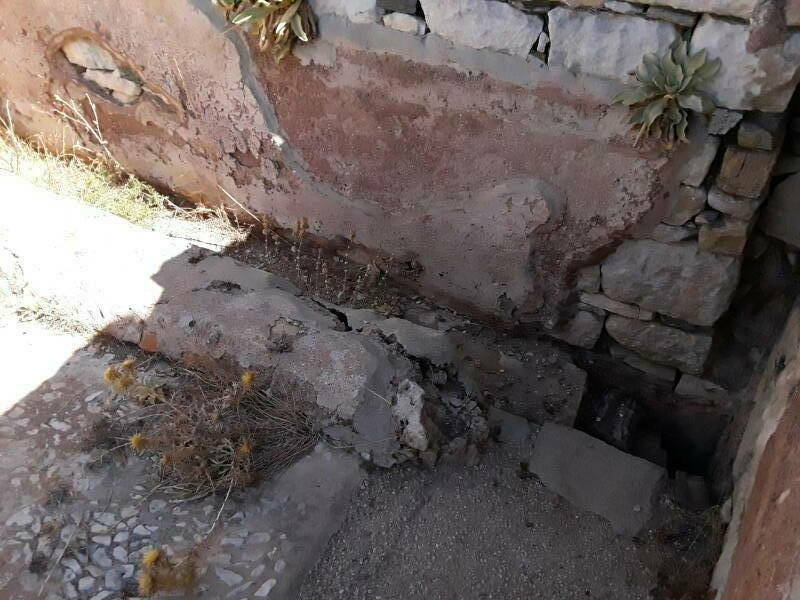
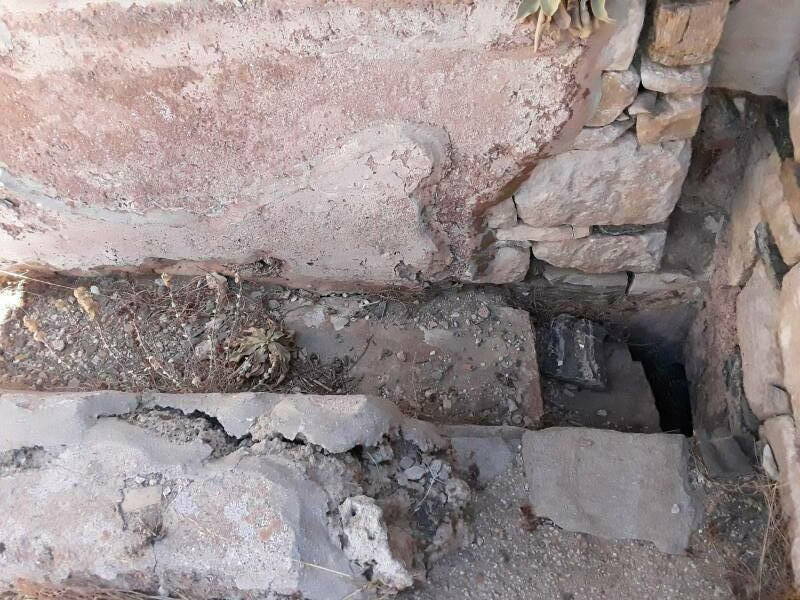
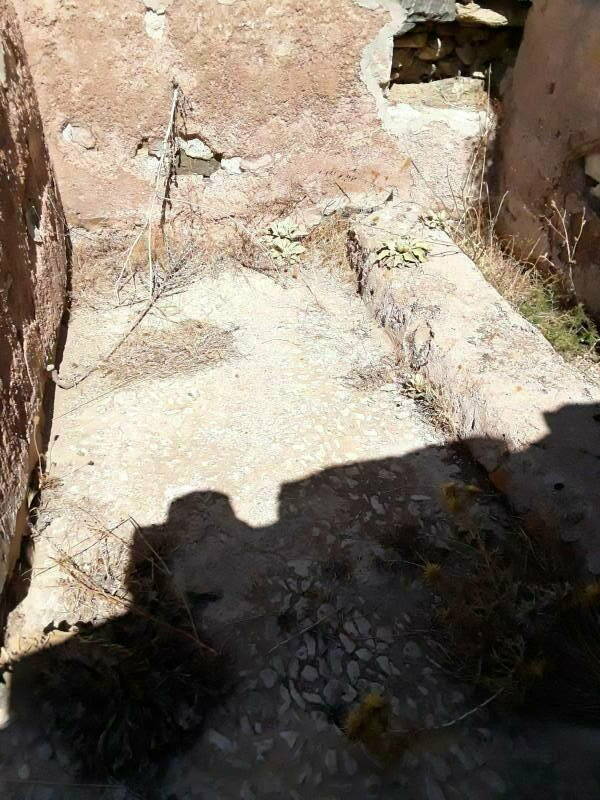
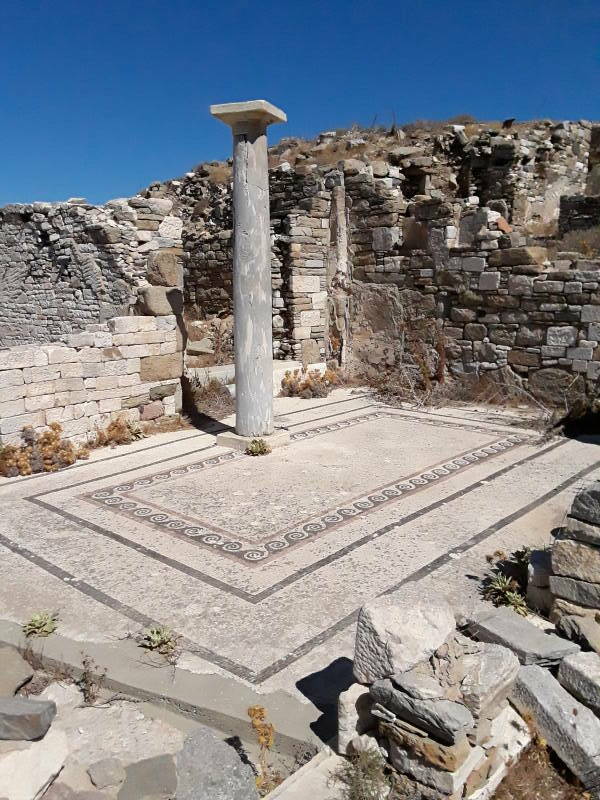
The House of Inopos has its latrine to the right immediately inside the door.
House of Hermes
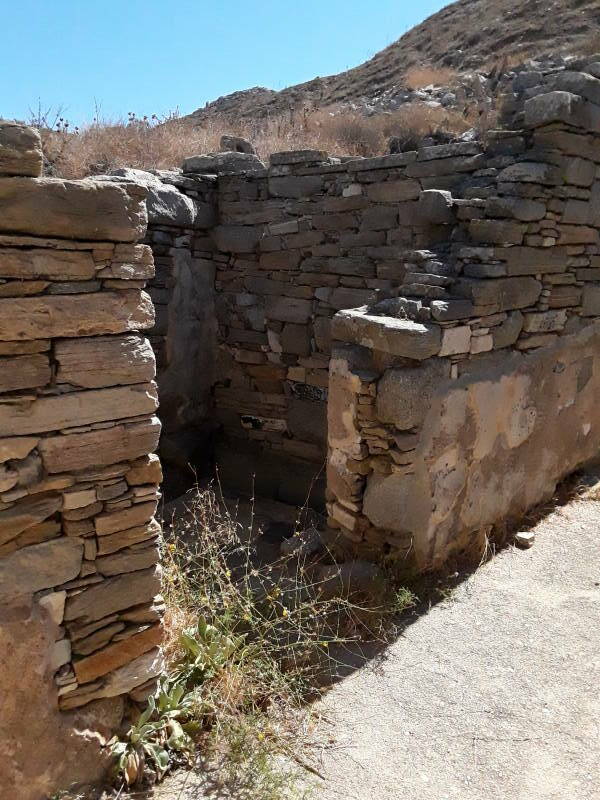
The House of Hermes was the grand finale of this visit. It's a four-story partially reconstructed house of the late 2nd century BCE. The entrance is just beyond the nearest corner in the below view. That door opens into a hallway that proceeds into the house. The latrine is to the left just inside that doorway.
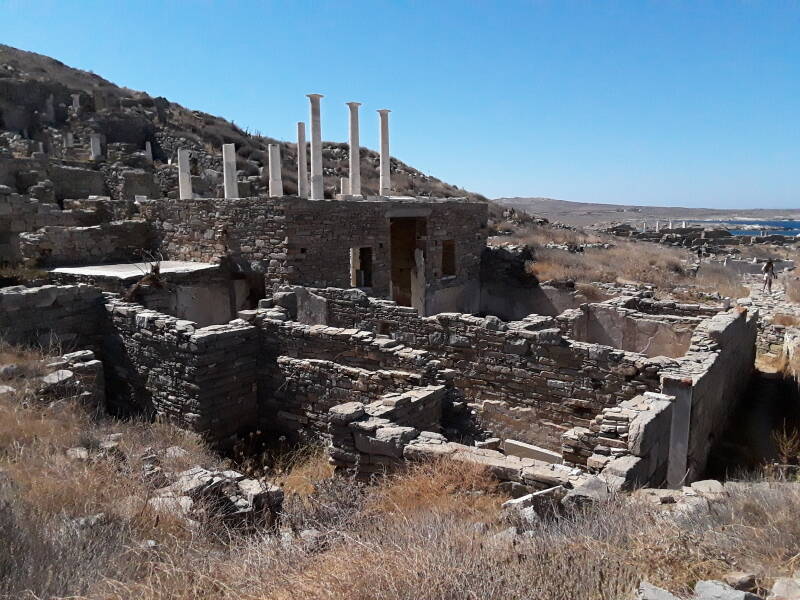
Here's the view down that hallway from above, then down into the latrine from above.
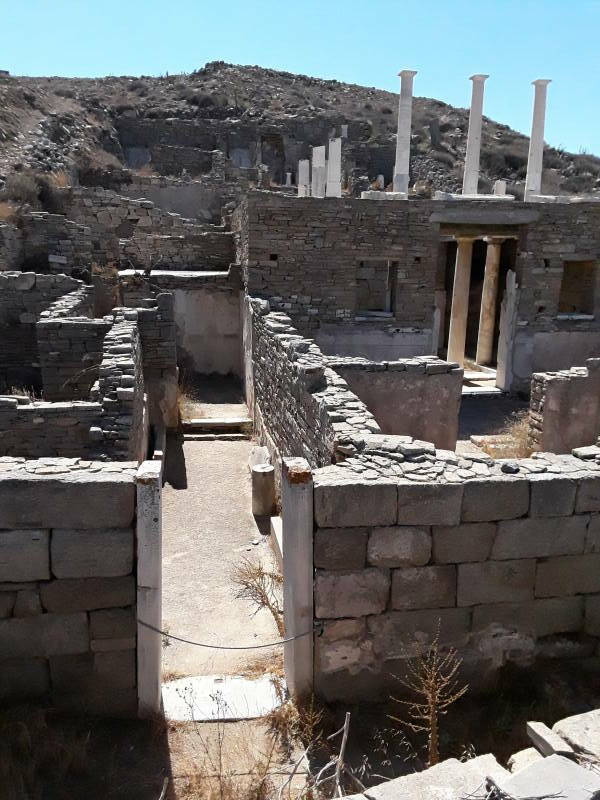
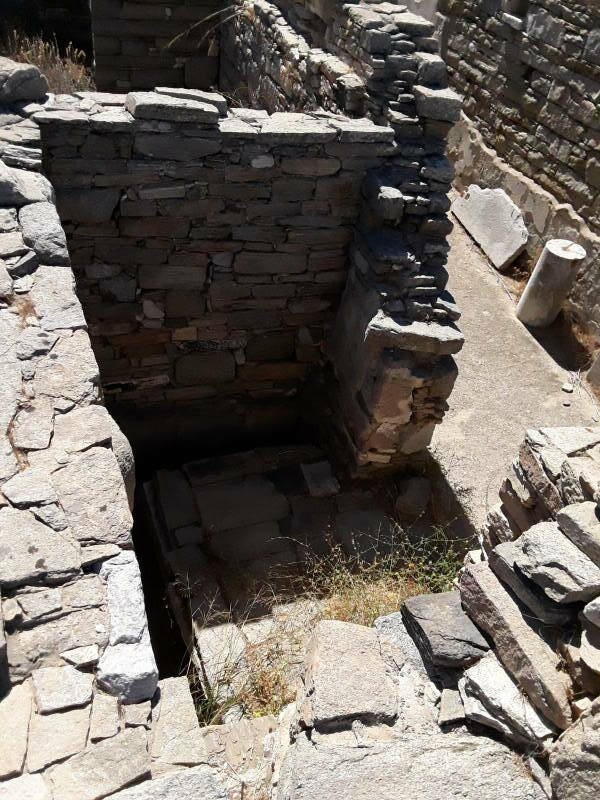
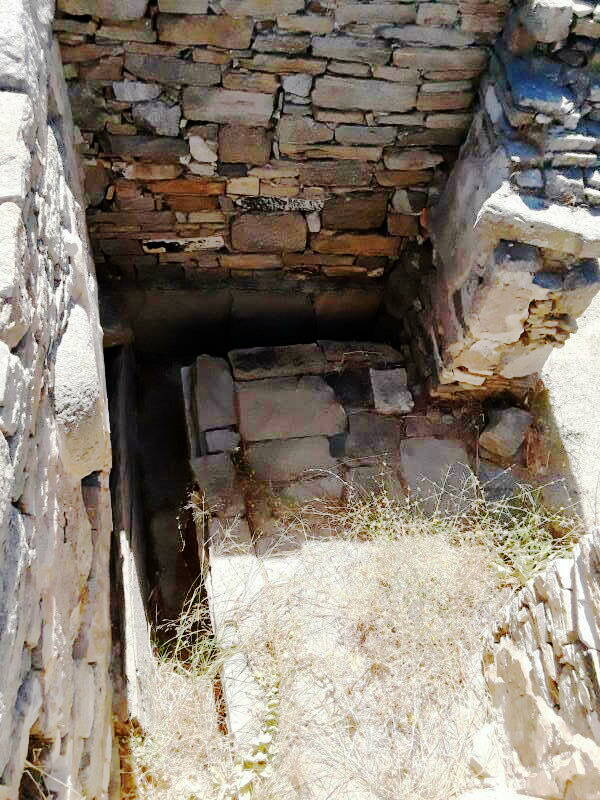
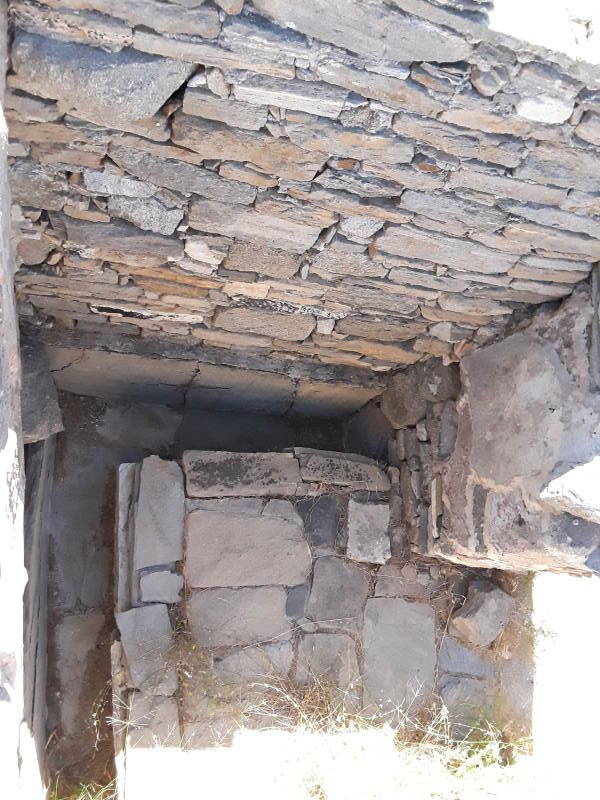
I can make my way around the front, then down to the entry level to look down the hall and into the latrine.
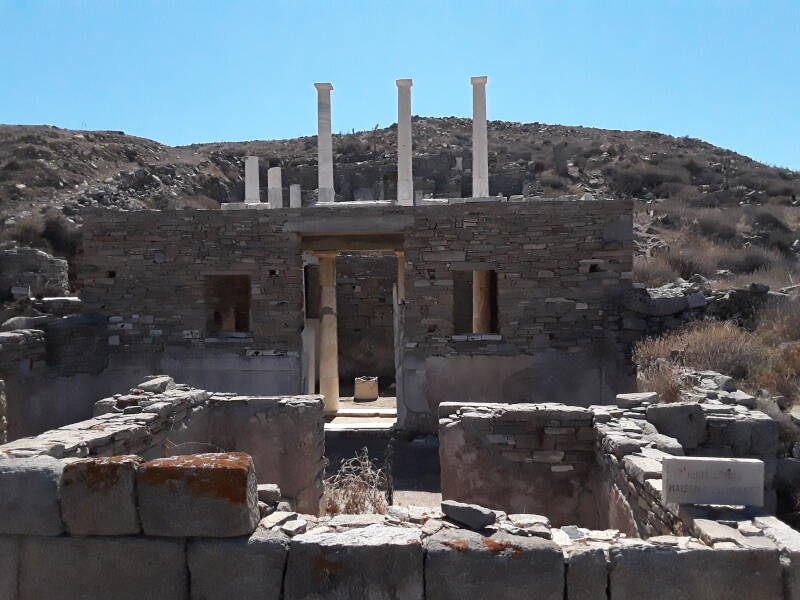
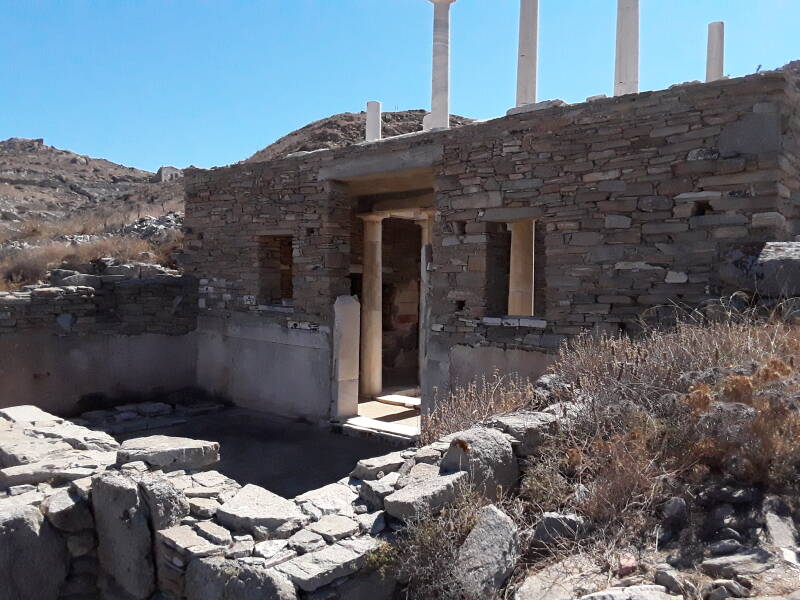
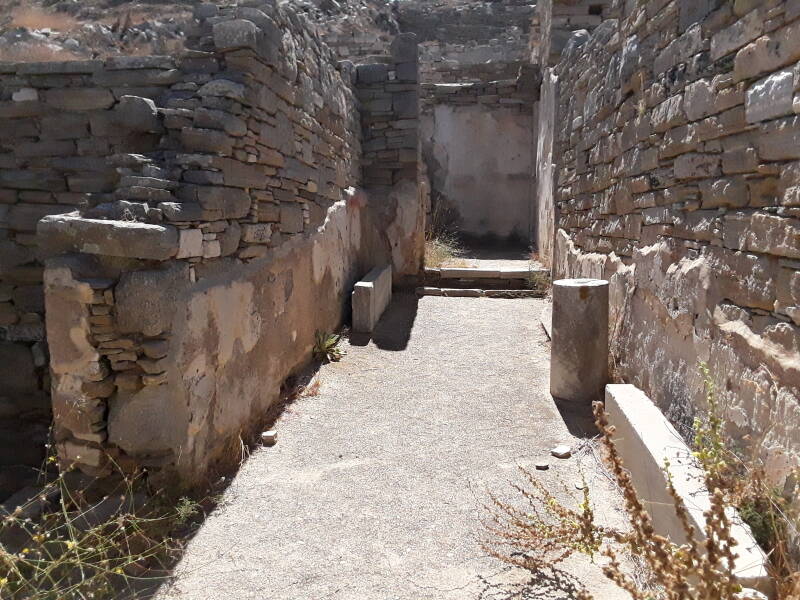
Χρησιμοποιήστε τρεις πέτρες — Use Three Stones
If neither a tersorium nor water were available, the Greeks and Romans used πεσσοι or pessoi, small stones, to clean themselves. The tradition started with the ancient Greeks that three stones should be enough to finish the job. This convention has been very long lived, with a hādīth attributed to Muhammad specifying three stones as the ideal number for anal cleaning. The pessoi were also used in an ancient board game in Greece. Aristophanes wrote a scene involving pessoi in Peace in the 5th century BCE. Here's the Penguin Classics translation:
Arms dealer [displaying a cuirass]: And what, alack, shall I do with this rounded cuirass, a beautiful fit, worth ten minas?
Trygaeus: Well, that one will not make a loss for you, anyway. Give me that at cost price. It will be very convenient to crap in ...
Arms dealer: Stop this impudent mockery of my goods!
Trygaeus [placing the cuirass on the ground like a chamber pot and squatting on it]: Like this, if you put three stones beside it. Is it not clever?
The Greeks would use όστρακα or ostraka, small pieces of broken ceramic goods, to vote to shun or ban their opponents. This is where we get the word ostracize. Some scholars have suggested that the ostraka could be used as pessoi, literally wiping your feces onto the names of hated individuals. The abrasive characteristics of broken ceramic material suggest that long-term used of these as pessoi could have resulted in localized irritation at the least, progressing to skin or mucosal damage or the irritation of external hemorrhoids. For more on toilet use of pessoi and ostraka and the medical implications see the paper "Toilet hygiene in the classical era", Philippe Charlier, Luc Brun, Clarisse Prêtre, and Isabelle Huynh-Charlier, in BMJ (the British Medical Journal) 2012, pages 345-346.